
THE DELICACY OF DIRECTING: AN IN-DEPTH CONVERSATION WITH GEORGE STEVENS JUNIOR ON HIS FATHER’S LEGACIES by Matthew Gentile
This interview has been edited and condensed for clarity.
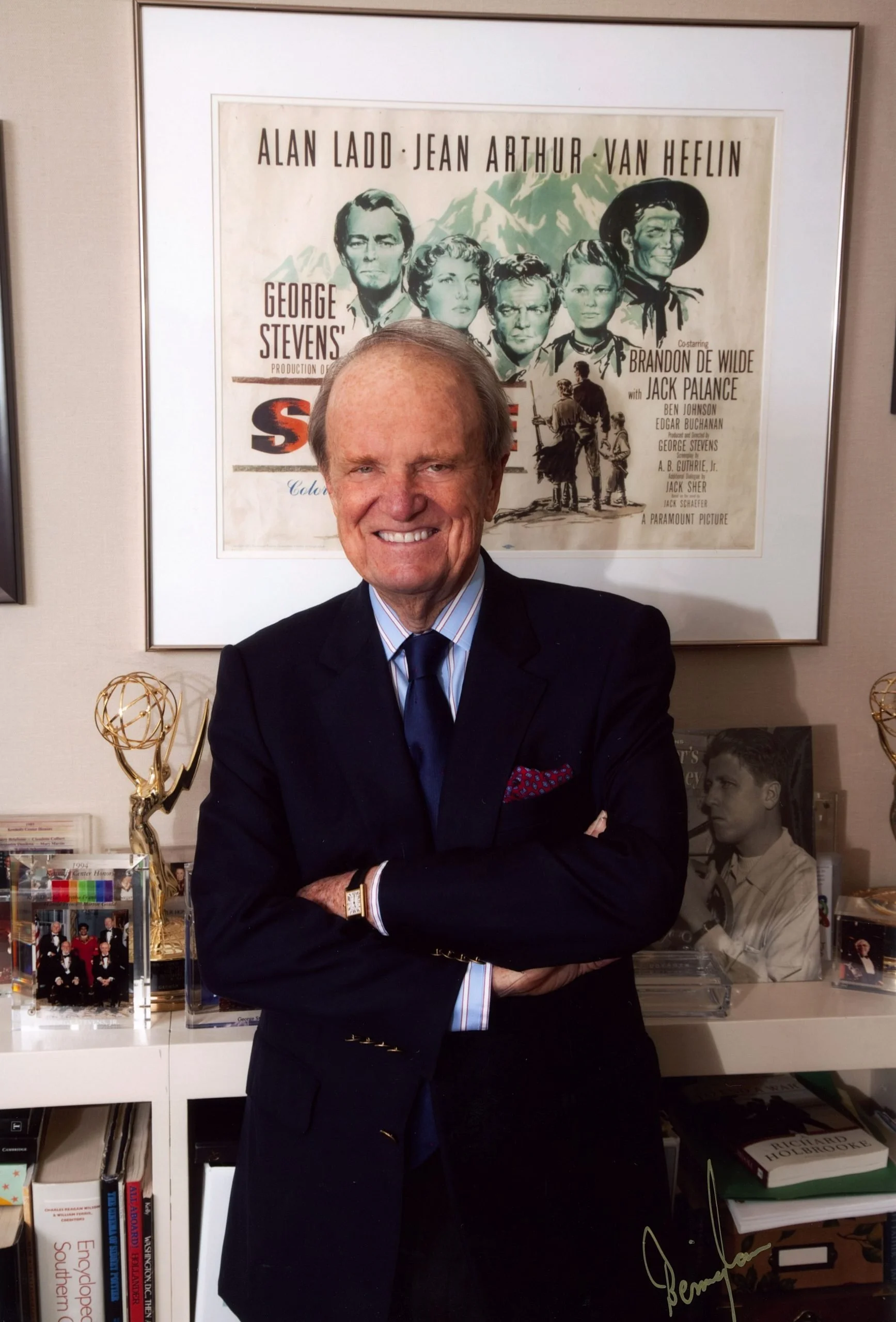
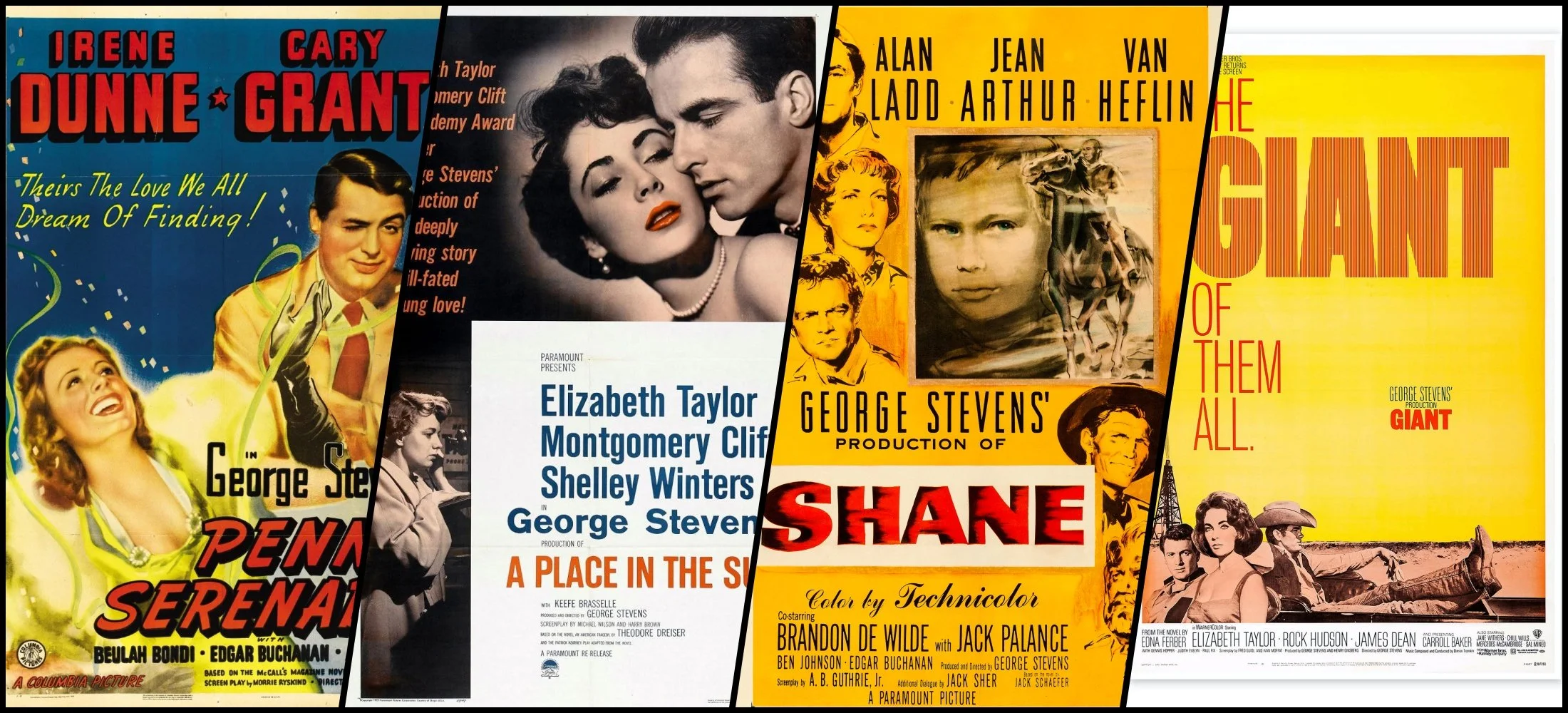
MATTHEW GENTILE: George Stevens Jr. is with me today. He has worn many hats as a producer, director, screenwriter, the founder of the American Film Institute, the creator of the AFI Lifetime Achievement Award, and the co-creator of the Kennedy Center Honors. For his achievements in cinema and television, Mr. Stevens Jr. has won 14 Emmys, two Peabody Awards, eight Writers Guild of America Awards, as well as a Humanitas Prize, an honorary Oscar in 2012, which was presented to him by his collaborator, Sidney Poitier. In January of this past year, Mr. Stevens Jr. was honoredby President Joe Biden with the Presidential Medal of Freedom — America’s highest honor for a civilian. In 2022, he released his captivating memoir, My Place in the Sun, Life in the Golden Age of Hollywood and Washington, which tells the story of him and his father, George Stevens Sr., who directed copious classics such as A Place in the Sun, Giant, and Shane, among many, many others. Mr. Stevens Jr.’s revered documentary about his father, George Stevens, A Filmmaker’s Journey, has been newly restored this year and is now streaming on Max.
GEORGE STEVENS JUNIOR: Yes, well, I’m really happy to be here and looking forward to the conversation.
MG: I’ll start on the record by saying that your work has affected many people’s lives, including my own. I am a proud alum of the American Film Institute, and you founded the American Film Institute. So the number of filmmakers whose lives you have shaped is tremendous.
GSJ: Thank you. Of course, it’s a great satisfaction to have been able to do that and to see so many people who’ve made wonderful careers and contributed to the legacy of film with their own work, including you.
MG: Thank you. That means a lot coming from you. I want to begin with two themes that I’ve noticed keep coming up in your book, in your life, and in your discussion of your father’s legacy. One is: the test of time. The other is a respect for the audience. Let’s start with the test of time. Can you talk about what that means to you and how you learned that from your father?
GSJ: Yes, I can tell you a story. In 1952, I went to the Academy Awards with my father, and I sat next to him in the theater. Joseph Mankiewicz came on the stage, who had been the recipient of the Oscar for Best Directing the year before for All About Eve. And he said the nominees are: John Houston for The African Queen, William Wyler for Detective Story, Vincent Minelli for An American in Paris, Elia Kazan for A Streetcar Named Desire. And George Stevens for A Place in the Sun. You might say it was a vintage year. And I would likely not be telling you this story if John Huston had won that year, but my father won for A Place in the Sun. It was his first Oscar. And riding home that night, the Oscar was lying on the seat in between us. He was driving the car, and I was about 18 and I was excited. And for some reason, he looked over at me and said: “You know, we’ll have a better idea of what kind of a picture this is in about twenty-five years.” And that’s when movies came and went. But he had this sense that the test of time was what was important in a picture. I don’t think he knew that night, in fact — I’m sure he didn’t — that he was talking to the future founder of the American Film Institute, the creator of the Kennedy Center Honors, all of which was based on the test of time. So I’ve just found it an important lodestone of my life. It helped me frame things and think about things.
MG: Let’s start with A Place in the Sun (1951), because it’s such a magnificent film. People talk about it sometimes as a melodrama, but I’m struck by how understated it is — the subtleties of the picture. It’s interesting to me how Mike Nichols said he watched it a hundred times before he made Who’s Afraid of Virginia Woolf?, calling it the only film school he had. Can you talk about working on that film, and specifically what you learned from watching your father work?
GSJ: I visited the set from time to time, and I spent a lot of time with him in the editing room, which had Moviolas and Steenbeck machines. But he felt the screen was too small so he built a projection room at Paramount with a full screen that had two projectors, and he had a control of each projector at his seat in this small screening room so he could run the film back and forth and pick out that moment when he felt that the truth was in Elizabeth Taylor’s eyes, or the confusion in Monty Clift’s face. And whenever I see it, it’s breathtaking. Just this kind of simplicity of it in a way.
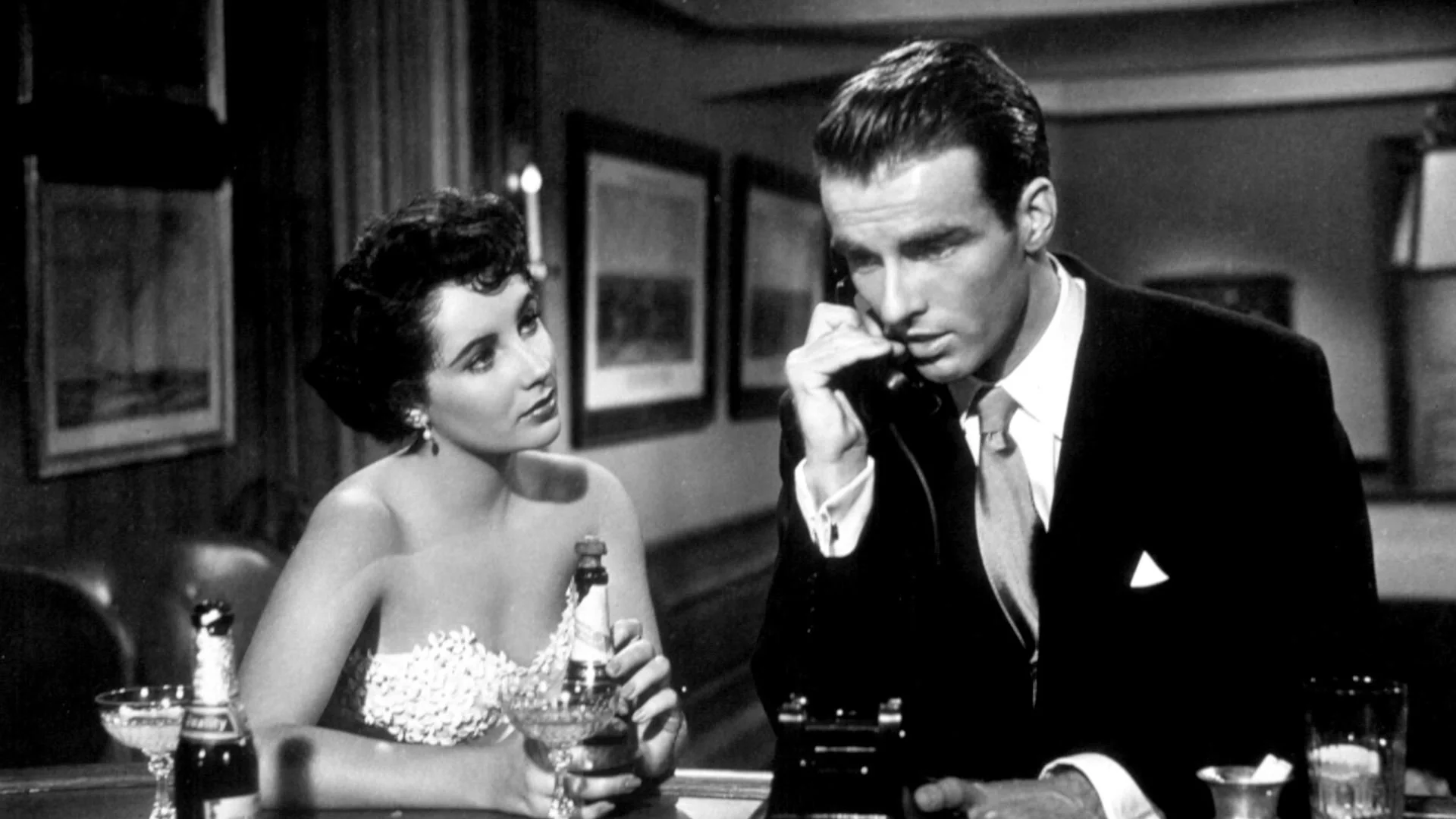
There are no fancy shots, no shiny angles…but the camera is functioning so beautifully to put the audience in the position to see what they want to see.
MG: The blocking is so fluid and natural that it keeps your attention the whole time. And you could see how Mike Nichols learned from it in Who’s Afraid of Virginia Woolf? and The Graduate.
GSJ: There’s a scene where Shelley Winters, who discovers she’s pregnant by Montgomery Clift, goes to see a doctor, seeking an abortion, which was a word you couldn’t use in a film in those times. And it’s an old, dignified doctor with a narrow face. And Shelley is giving him some story about how she’s pregnant, and her husband doesn’t have much money. And she’s pouring her heart out. And Shelley could be very emotional. But my father said to her: Shelley, this is the take that we’re going to use. And it’s on you. And I’m going to keep this camera running. But I’m gonna stop it
if you start to cry. So you see that scene, and it’s just so powerful because instead of allowing Shelley to be sorry for herself, she’s actually being brave and trying not to show her emotions.
MG: Wow. The casting of Shelley Winters in that role was very much a casting against type, wasn’t it? Because she was a sex symbol. And this role was very much not that. It’s such a great performance. Can you talk more about how he worked with actors? Did he rehearse a lot with them?
GSJ: One day, I visited him on the set. I drove over from Occidental College on a Saturday. They used to shoot on Saturdays. And he was breaking in a new scene with Montgomery Clift and Elizabeth Taylor. And they came, and he talked with them a little bit. And he said: “well, why don’t we just run through it? And Monty, find a place you’re comfortable, maybe over by the pool table. And Elizabeth, I guess you ought to start at the door because you’re going to enter. And just run through it.” So they went through it, and the script supervisor was helping them with lines because, you know, it was their first time they’d done it and it wasn’t totally memorized. And it finished. And Dad said: “that’s interesting. Why don’t we just do it one more time?” And so they went and they did it again. And he says: “Well, yeah, okay. Well, let’s just run it one more time. We’re finding our wayhere.” So they did it again. And after that, Monty came over and started to talk to him, Elizabeth followed, and then they had some more conversations, did some more rehearsals. And finally, they had the scene shaped. And he turned it over to William Mellor to light the set. So I asked him: “Why did you have them go through it three times before you had any conversation?” And he said: “Sometimes it’s helpful for the actors to know they need a little help.” And then they were ready for him, rather than if he came in and said, “You stand over there”. That was also his way of finding out, what the actors could bring to it that he wasn’t expecting. The other part of it was that the set was extremely quiet. He didn’t want the assistant director to shout “quiet”. He just had a bell go off. He didn’t want to change the temperature for the actors, with people shouting for quiet. So to make the actor as comfortable as possible in the situation — that was another thing he took great care with.
MG: I think that care and respect for the acting process is what most likely allowed him to get those amazing performances, not just in that film, but in all of the films. And clearly, you learned from it as well in your directing. Can you talk about your experience working with Sidney Poitier as Thurgood Marshall and Burt Lancaster as John W. Davis in Separate But Equal?
GSJ: It was about making them comfortable. For Burt, it was his last film, and he was having trouble remembering lines, and he had an Irish temper, so he’d get into a rage when he couldn’t remember his lines. And with Sidney, there was one scene where he was doing a lot of extroverted stuff. And of course, I remember Sidney from The Defiant Ones and In The Heat of the Night. And I wasn’t sure. So I said: let’s change the lighting or something. It was a very crowded practical set, and so we walked around, and we found a room that was very dark with lamps and everything, a storage room. And I said to Sidney: “I’m not sure just what you’re doing.” And I saw his eyes get cold. There’s a long silence. And Sidney says: “Well, what is it that you want? Perhaps you should tell me.” There was an awkward pause. And then I said: “I think of Thurgood Marshall as a man with secrets.” Sidney said, “When you want that, just say that word.” And that’s how I kind of survived an awkward situation that I’d created. But, you know, I think directors just have to be very alert and thoughtful about the people who are putting themselves in front of the camera.
MG: What were some other key lessons you took from working with your father that you were able to apply to your directing?
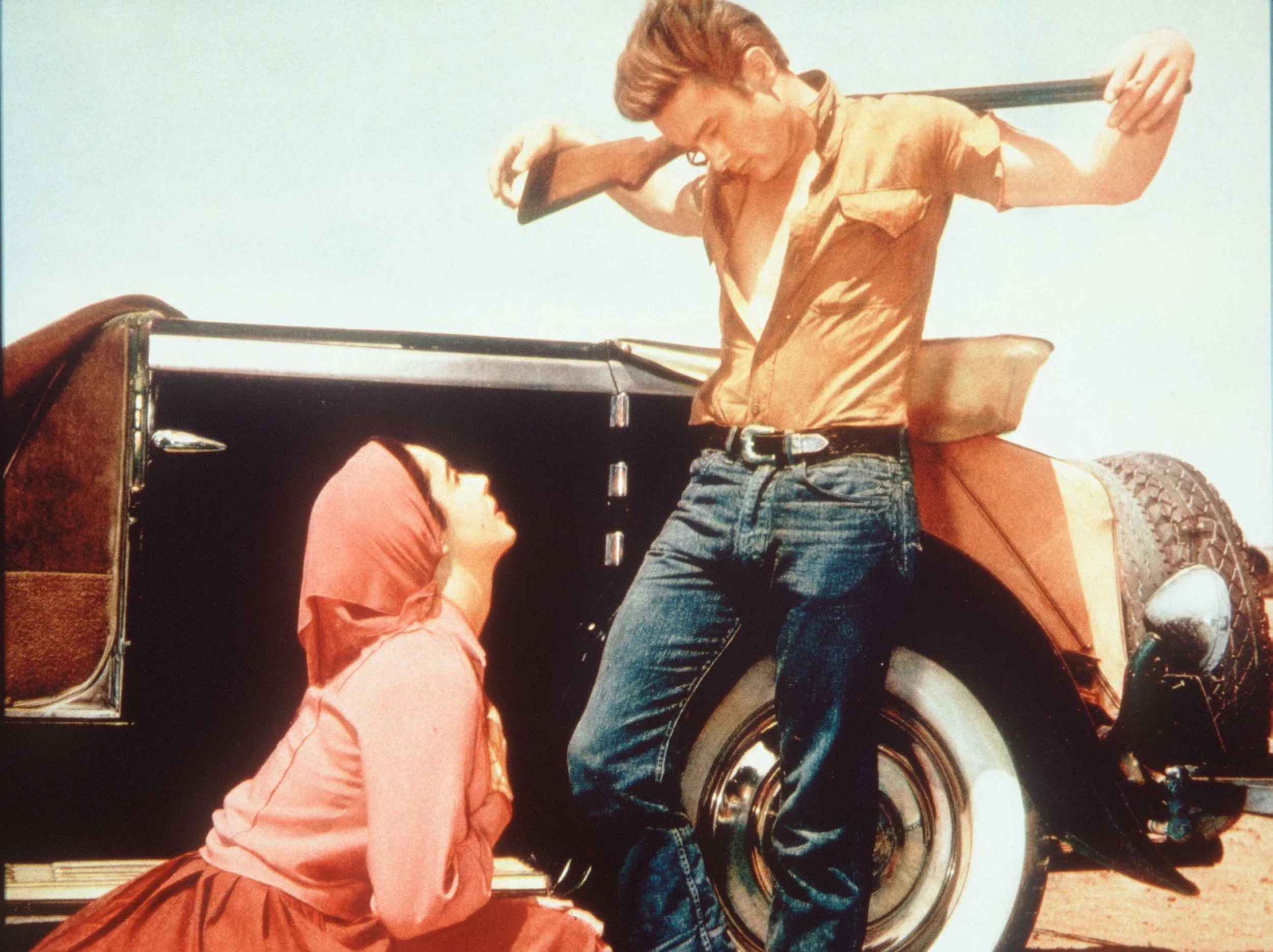
GSJ: His leadership. He didn’t have to shout at people. I learned so much in the editing room on Shane, Giant,The Diary of Anne Frank. Seeing how he put scenes together and corrected mistakes. Working very hard. He’d spend a year editing a film. I mean, just making it better. I remember once on Giant, it was a hot summer afternoon, and I’m young, and I said: “Dad, we’ve previewed this twice and it went well. Don’t you think you just ought to lock it up and put it out there?” And he said: “When you think about how many man-hours are going to be spent around the world watching this movie, if we spend a little more of our time making it as good as it can be — I think it’s justified for those people who are going to be spending all that time watching it.”
MG: I would love to talk about your father’s approach to comedy. Because I think maybe something people don’t associate as much with George Stevens is how great he was at comedy and the timing of it. He started his career as a cameraman for Laurel and Hardy?
GSJ: He did. He said working with Stan Laurel and Oliver Hardy, that he learned that comedy could be graceful and human. And his comedy is that. He felt that comedy came out of believable characters, not people acting cute. It’s again respecting the audeince. Let them realize that it’s funny, don’t force them. His father ran a theater, directed plays, and starred in them. So Dad was around actors and storytelling even as a kid. There’s a little tape recording I came upon where someone was interviewing him, and Dad told a story about being in the theater. He said his parents didn’t have a lot of money…so he and his brother had to come and spend the nights at the theater and do their homework under the stage. And his favorite time was when his father was playing Sidney Carton in A Tale of Two Cities, and he said he’d always get close under the stage for the end. He would hear his father climb up the steps to the guillotine, and hear the audience become very quiet. Then he’d hear him say: “it is a far, far better thing I do than I have ever done before. It is a far, far better thing I do than I have ever done before. It is a far, far better place I go to.” And then you hear the guillotine come down with this tremendous thump. A deathly silence in the audience. The curtain unfurls, comes down, and hits the stage. And then you hear all hands coming together as one, applauding.
MG: So his care for the audience came from an early age.
GSJ: He just had a gift for it. And for developing it. There’s a moment in Shane, with Jean Arthur’s character, and the attraction between Shane and her, and it’s so delicate. He just had a touch. Ginger Rogers told me that in Swing Time, George gave us something special, that it was just so believable, and people were touched by it. The scene when Fred sings to her “the way you look tonight” — he knew how to make a scene like that really touch you.
MG: I also think of Cary Grant’s performance in Penny Serenade, which was quite unusual for Cary Grant.
GSJ: Cary and I talked about it when I was interviewing him for A Filmmaker’s Journey, and we talked about Penny Serenade. For the audience that hasn’t seen it, it’s a film where Cary Grant and Irenne Dunne adopt a child and then almost lose a child and it’s a comedy as well as a drama. There’s a famous scene when Cary has to go back to the orphanage because he hasn’t earned enough money to keep his baby, and he has to plead to a judge — and it’s just so delicate and wonderful.
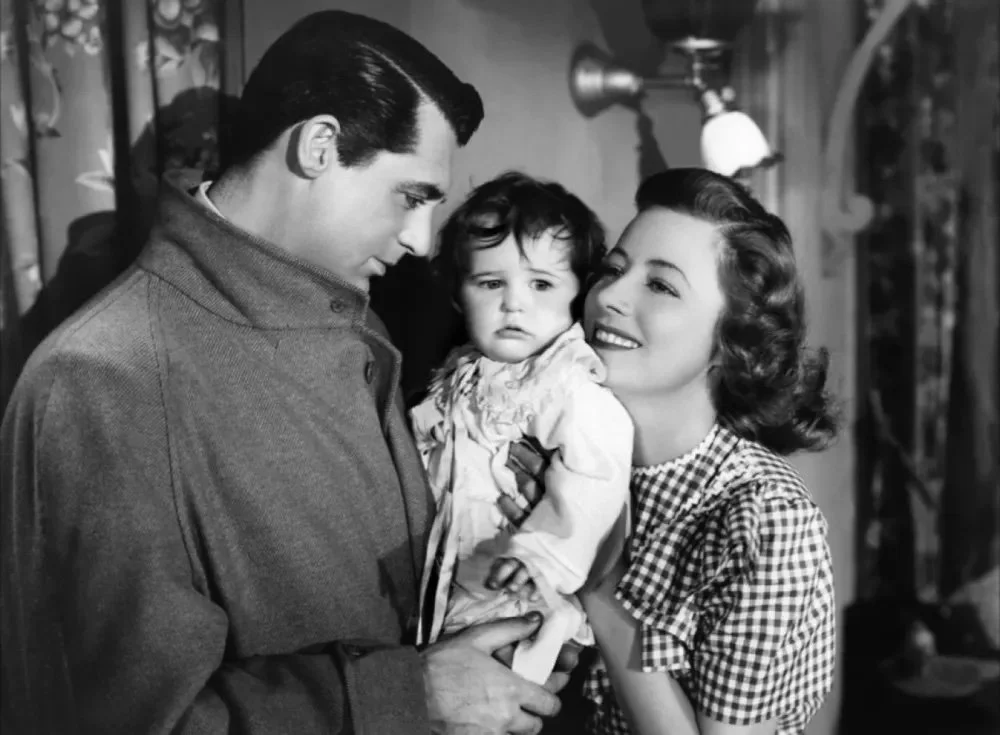
MG: One of the all-time great scenes, and one that I think doesn’t get talked about enough. I want to take you back to your documentary about your father’s work, George Stevens, A Filmmaker’s Journey. It’s such an incredible film and you go so in-depth on your father’s films. I realized later on that you must’ve made that documentary years after you lost your father. Can you talk about the experience of making this documentary while coping with loss?
GSJ: He had this store room — the film opens in the storeroom — where he kept everything. His film scripts. His memorabilia from the war. A huge red cabinet with all of his awards that always stayed in the cabinet. They were never in his office. And photographs. And he left all of it to me. And the responsibility for it. He said to me once, “I keep all of this stuff. And it’s really become a burden to me. I’ve left it to you, but I don’t want it to become a burden to you like it has to me. You can throw it in the LA River, for all I care.” It was the only time we ever talked about death. And then after he died, I went back to the storeroom and started going through it. And I realized that in this room was the evidence of a man’s life. And people had been suggesting I write a book about my father. And that was right there that I said: No, I’ve got to make a film. And people weren’t making films of that sort back then. And so it was kind of perilous, because I was spending a lot on it. I got a few small grants. And also, I was running the American Film Institute. I rented a room in an apartment building to edit, I was running up all these bills, and I had to do my AFI work. But I thought it would be easy because I had been writing and producing the AFI Life Achievement Awards for John Huston and Billy Wilder. And I figured this is the same kind of thing, but it wasn’t. Because it was a story of my father’s life. It was just a task you had to grapple with. I learned from him, you just keep working.
MG: How did you come to narrate the film?
GSJ: Back then, the way you’d make a film like that saleable was to get a famous actor to narrate it. So we thought of friends like Warren Beatty, Gregory Peck, John Huston. Then I got a call in my office in Washington from Hollywood. “George, it’s Orson Welles. When your father came to RKO when I was out there to make Citizen Kane, he was a young veteran. And he was very kind to me. If I can help your film about him in any way, I’d be happy to do it.” But then my friend Toni Vellani told me I had to narrate it because it’s a father-son story.
MG: I think the documentary has so much power because it’s your voice, and it’s the same with your audiobook version of MY PLACE IN THE SUN. There’s a period you talk about in the book where your father achieved more creative control at a certain point in his career, and how it important that is for directors. When did he gain control in his career?
GSJ: It was very early. His first major studio picture was Alice Adams with Katherine Hepburn, based on a Booth Tarkington story about a poor girl in a society in Indiana trying to fit in. The studio had a happier ending where the girl gets the boy. But Kate and my father wanted it to be that she decided to go out and get a job. And they were disappointed. With Gunga Din, he drove the studio crazy by going over budget — but it turned out to be the most successful picture in RKO history. And then Harry Cohn, often described as a villainous figure, who ran Columbia Pictures, asked him to come over to Columbia and said, “I won’t come on the set.” And so he had control and final cut there and with Talk of the Town, Penny Serenade, and The More the Merrier. And then Kate Hepburn asked him to direct a picture she was doing at MGM. But my father wanted no part of MGM — Woman of the Year. Because it was run by Louis B. Mayer. That was a producer’s studio, not a director’s studio. But she asked him, so he said he’d do it. And he did it, and they again had a problem, a question about the ending of the film. But he eventually had his way. Still, he felt the proximity of Mayer and all of his guys at some point. After the war, he had some struggles, but pretty much, he controlled his films.
MG: You can sense it. If you were to meet a 14-year-old who told you that they wanted to be a filmmaker and they had not known your father’s work yet. And they were looking for an entry point into George Stevens’s filmography. What would you recommend they start with?
GSJ: Depending on how sophisticated they are, I’d say: A Place in the Sun or Shane are two unpretentious masterpieces. They’re just films that respect the audience. Christopher Nolan introduced Shane at the George Stevens Lecture at the Academy two years ago. He talked about how evil was shown in SHANE and how that influenced him for The Dark Knight.
MG: As someone who created the AFI and has devoted their life’s work to preserving film/filmmakers and their legacies — what do you feel young filmmakers and cinephiles can learn from the films of George Stevens Junior and the Classic Hollywood Cinema?
GSJ: Well, if you pick the right films from the right filmmaker — I certainly want to include John Ford and so many others — you’re going to learn a lot about life in watching those films. My father used to say, “I usually know in the first five minutes of watching a film whether or not I’m in good hands.” And if you watch a George Stevens film, you feel you’e in good hands. And it’s so true of so many other directors: William Wyler, David Lean. Just trace through the history. But there’s something about the Golden Age that I think is different. You’ll find some really good films in the 70s, 80s or 90s. But there’s just something about the volume of the Golden Age. I think the war may have something to do with it. My father was a young guy before the war, making these great comedies that were also dramas. They had pathos. And then after the war, you know, he came back, and it was a different kind of film. It was more about America and about the world. So, you won’t be wasting your time.
MATTHEW GENTILE is a director and screenwriter based in Los Angeles. His first feature, AMERICAN MURDERER, stars Tom Pelphrey, Ryan Phillippe, Idina Menzel, and Jacki Weaver and was distributed by Lionsgate/Saban and Universal. You can follow him on Instagram at @matthewgentiledirector or his website: www.matthewgentiledirector.com