
THE ART OF PRESERVATION: A Conversation with Deborah Stoiber about nitrate prints, restorations, and two masterpieces: The Day of Wrath and The Ox-Bow Incident. By Matthew Gentile
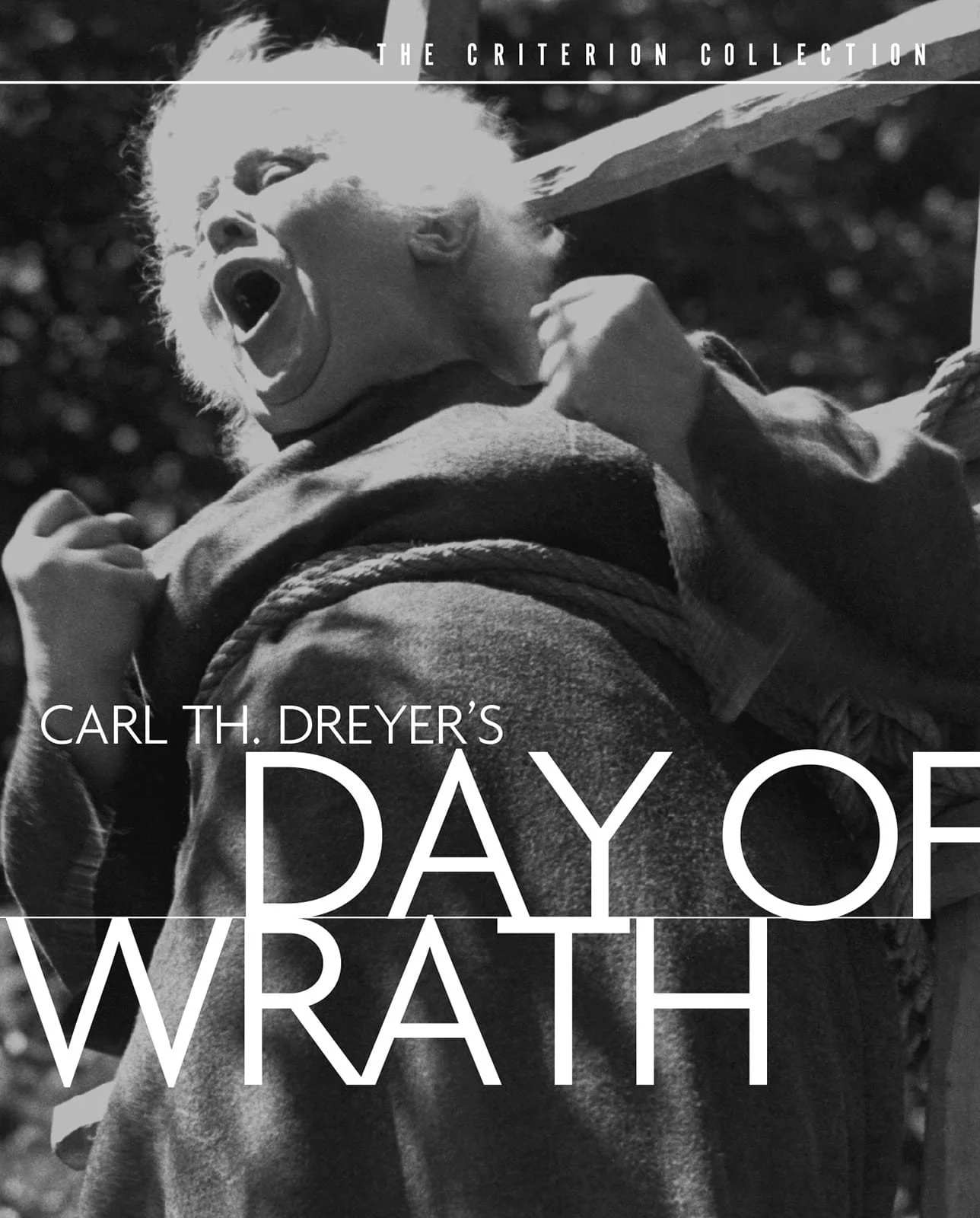
On June 7th of 2025, the AMERICAN CINEMATHEQUE hosted — as a part of their famous, now worldwide festival BLEAK WEEK (a screening series focused on deep, dark, and heavy, aka, feel-bad cinema) — a screening of Carl Dreyer’s 1943 masterpiece, DAY OF WRATH.
Filmed during the Nazi occupation of Denmark and set in the seventeenth century, it’s focused on the second wife of a pastor who falls in love with her stepson amid paranoia and witch hunts. If it sounds like a melodrama — trust me, it isn’t.
The screening, on a hot LA summer day at 1:00 PM, was sold out, and seats were filled with filmmakers such as Rian Johnson, Karina Longworth, my mentor and friend Larry Karaszewski, among many others.
Before the film started, Deborah Stoiber — collection manager in the Moving Image Department at the George Eastman Museum — introduced the rare nitrate print in a way that caught my attention and set me up for an unforgettable viewing experience.
So as part of my mission with SECRET MOVIE CLUB to spotlight restorations and the archivists who work so hard to restore them, I decided to video call Deborrah and interview her about her work at the George Eastman Museum and why this film, DAY OF WRATH, is important to our time. She had a lot to say and offered many insights into the work that goes into preserving films, and offered a fantastic Classic Hollywood Cinema recommendation for a companion piece to DAY OF WRATH.
I hope you enjoy our conversation.
This interview has been condensed and edited for clarity.
MG: Can you talk about how you began working in film preservation?
DS: I was born and raised in Fresno, California, and I worked at a movie theater in my hometown. And I was there for many years. I started off working at the concession counter when I was 16 and then I worked my way up to be a projectionist and assistant manager. I was doing this while working on my degree in economics at California State University, Fresno. And I talked to my boss about graduating, and he asked me: “What do you want to do with your life?” And I said: “I'm interested in knowing what happens to the movies after they leave the theater. Where do they go?” And he suggested I contact Kodak. And through Kodak, I found the George Eastman Museum. At the time, it was George Eastman House and the Selznick School of Film Preservation. So I applied, and I didn't think I would get in because I don't have a film degree, but I had a lot of film handling and projection experience. And I did get into the program. So in 1997, I moved to Rochester, New York. I was planning on staying a year and then moving back to the Los Angeles area to look for a job working with archiving motion picture films. That didn't happen. I'm still here. 28 years later. I met somebody out here, been married 25 years, and I've been working at the George Eastman Museum almost the entire time that I've been out here.
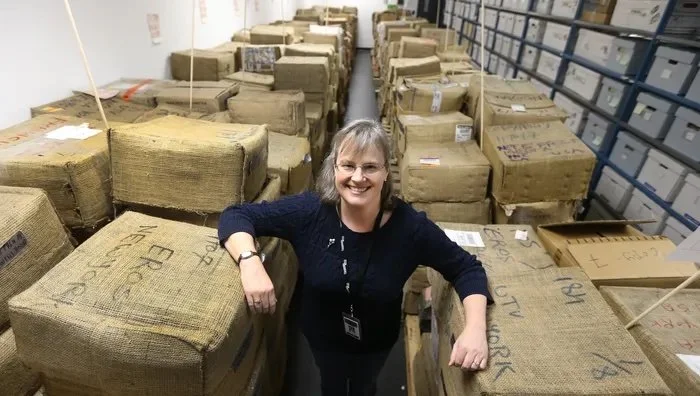
Deborah Stoiber, film preservationist, of the George Eastman Museum
MG: The George Eastman Museum’s collection is extensive. Can you talk about what area you specifically specialize in?
DS: I specialized in the nitrate motion picture film for the majority of that time. I'm also the collection manager now, so I do work a lot with new acquisitions. I work a lot with extended loans. I do a lot of work with films to get them ready for projection for special screenings, such as the one you attended for Day of Wrath. I do a lot of work with our 70 millimeter collection for screenings and other nitrates as well. And I do teach in the Selznick School of Film Preservation. The school is going into its 30th year in the program, and it's still very successful. We have a high rate of students finding jobs after they graduate. We've had students from over 28 countries come to Rochester to study here, and it's a real joy to work with the students, and it allows me to meet new people and to also update my own knowledge of how film preservation and restoration are going.
MG: I think a lot of film lovers don’t understand the work that goes into preserving and restoring films. Can you shine some light on that for us?
DS: Especially for a nitrate screening, it is a lot of work. So I'm actually at our nitrate vaults right now. Working on a nitrate film of The Westerner for screenings here in Rochester in November. And for that particular print, it's pulling it from our 40-degree Fahrenheit vaults. Getting up on a six-foot ladder. The rooms are very tall and skinny. We have 15 vaults here on site. And this is just our nitrate film collection. At the main museum and another off-site location, we store 85,000 reels of film. Along with 25,000 reels of nitrate, we have 110,000 reels overall. And finding a projectable nitrate print is like finding a needle in a haystack. Most of our films out here are negatives, or in most cases, the original negatives. So we have the original negative of Gone with the Wind, The Wizard of Oz, and Meet Me in St. Louis. Projection prints tend to be worn out and then are recycled for the silver. So finding a complete print that is not too shrunken to project in today's world from the nitrate era requires a lot of research and inspection. So we have inspection benches here, and we wind through the film frame by frame. We’re looking if those perforations are damaged. I'm checking with a very specialized machine how shrunken it is. Usually films that are shrunken by more than 1% are harder to project. It's harder to keep it in focus. It's hard to keep it from tearing in the projector or doing damage to it.
MG: So it requires a lot of caution, and delicacy.
DS: Exactly. These are considered to be museum objects, so you don't want to damage them with every viewing. You want to make sure you're not causing harm to the object so that people can still look at it in the future. But at the same time, you're trying to make it accessible to people as well. So you have to find that happy balance. That's where preservation comes in. So what I do is I will inspect a film frame by frame. To see if it looks OK. Does it look complete? Does it look like a truncated version for a foreign release? Does it look like it's been censored? Is it missing anything? Are the colors correct? Did it fade? I’m also looking to see if the film was unidentified or mistitled — which happens quite often with films…especially in the silent era — people will put down a title and then later find out they've given it the wrong title and it's actually a completely different film! And so it's a lot of the research and just having a very gentle touch with the film.
MG: Sounds incredibly labor-intensive. Let’s talk about Carl Dreyer’s The Day of Wrath and the introduction you gave at Bleak Week, which for me, set the film up perfectly. Can you talk about why this film is important to watch?
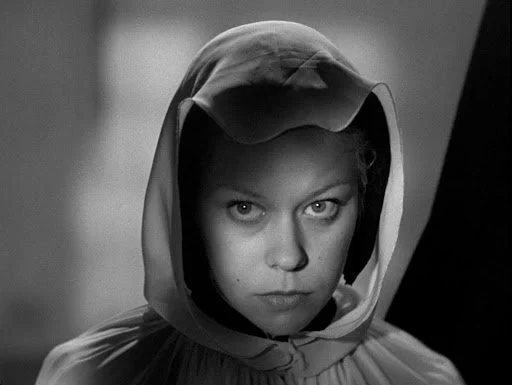
Director Dryer’s genius for close-ups is on full display in Day of Wrath.
DS: It is a beautiful print. It's an interesting story that takes place in 1623 in Denmark, where the film was made. And it is the story of witchcraft, and no, it does not have a happy ending. A reason why it's an important film to watch is based on the time period it was filmed in. It was made in 1943 in Denmark, during the German occupation, when the Nazis had taken over the film industry. And they are getting rid of a lot of things that they don't feel meet the Third Reich's standards. However, Dreyer brought in a new idea that went past all the German censors and sent a message to the people of Denmark and to the people of the world to say what was truly happening in their country. So it does start with a woman being accused of witchcraft and wanting to be hidden. There's no proof against her. There's nothing but evil lies and vendetta between people who just want this woman to be gone. They don't want her around. And so the story is really about the Holocaust. It's about Danish people being rounded up, murdered, and nobody stopping it. And how do you let this happen? How does this one young woman who's so tired and she's so unhappy, find some happiness in this horrible world she's living in? And her strength that she has throughout this entire movie, all the way to the very end — if you really watch it, you realize that she represents hope. You have to keep fighting. And if you lose the battle, it doesn't mean you necessarily lost the war. Just keep fighting. And that's the message of the movie.
MG: It’s a stunning film, and it was a stunning nitrate print. Can you talk about the print and its origins?
DS: The print we showed was a re-release from 1948 with English titles at the beginning. It was released in the US after the war, when we could finally get films back in from Europe. That shows you just what influence that movie had. Think about everybody who saw it before you and how that probably shaped their empathy and their political ideas or even just their social ideas. That’s the power of these older movies. That is the power of nitrate prints that are still able to be viewed today. And I can't stress enough why it's so important that we take a look at our film history, and hopefully look at it and not make the same mistakes over and over again. Because you think we would learn from some of our mistakes. And we have, we really have, but we can learn so much more if you would just take the time to sit back and really focus on those classic films. Put down your cell phone. Put down your social media account. Just watch a movie. Sit there and watch it with your best friend, your closest one. So you have somebody to talk to afterwards so you can express those ideas.
MG: For lovers of DAY OF WRATH, you had another film you wanted to recommend.
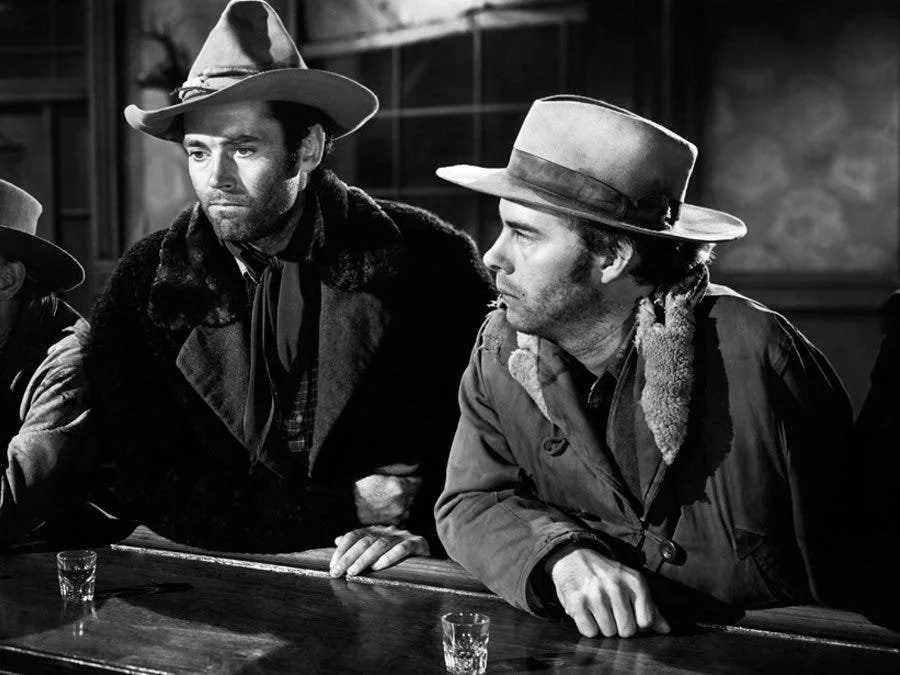
Henry Fonda in The Ox Bow Incident.
DS: Yes! THE OX-BOW INCIDENT [directed by William A. Wellman]. It was made at the same time — 1943 in Hollywood. By Fox Film Studios. I read the book first, and I loved it. And then I realized they adapted it with Henry Fonda, and it's one of the best adaptations from a book I've ever seen on film. This is the Hollywood take on what's going on in Day of Wrath — in the sense that it's a Western. Set in Nevada in 1868 in a small town with mostly men. There are hardly any women, and they're all cattlemen. One of the big ranch owners has been found shot, and some people were seen leaving the scene with some cattle that had his mark on it. The town rounds up the troops to go find these thieves and bring justice. And there's some division in the group. Like The Day of Wrath, it looks at a complex situation. Are these guys guilty or are they innocent? Do you let them state their case? Do you take them to trial? Or do you take the fascist approach and just say, we're going to get a bunch of vigilantes together? We're here to fight for what we want. This is how it's done. And I'm not going to tell you the end of the movie and what happens to all of these different characters. Or the speech that Henry Fonda gives at the end of this movie, which is so relevant to 2025. I just watched the movie again over the weekend. And it's amazing when you think about it. This is 1943. What's going on in the world? We’ve entered World War II. Not everybody in the US was happy about that at the time. So you can look at it from that point of view. All of these cattlemen are going to go find the enemy. But is that who they find? Are they truly the enemy? Or is the enemy within themselves? What do you consider to be the truth? Or justice? I can't recommend this movie enough.
MG: Just like how you set up THE DAY OF WRATH at BLEAK WEEK — I think you’ve set us up to watch yet another masterpiece, THE OX-BOW INCIDENT, that engages with our culture today. Deborah, thank you for taking the time to talk with me. The work you and your team are doing, like these great films, will stand the test of time and continue to be very appreciated by cinephiles around the world.
MATTHEW GENTILE is a director and screenwriter based in Los Angeles. His first feature, AMERICAN MURDERER, stars Tom Pelphrey, Ryan Phillippe, Idina Menzel, and Jacki Weaver and was distributed by Lionsgate/Saban and Universal. You can follow him on Instagram at @matthewgentiledirector or his website: www.matthewgentiledirector.com