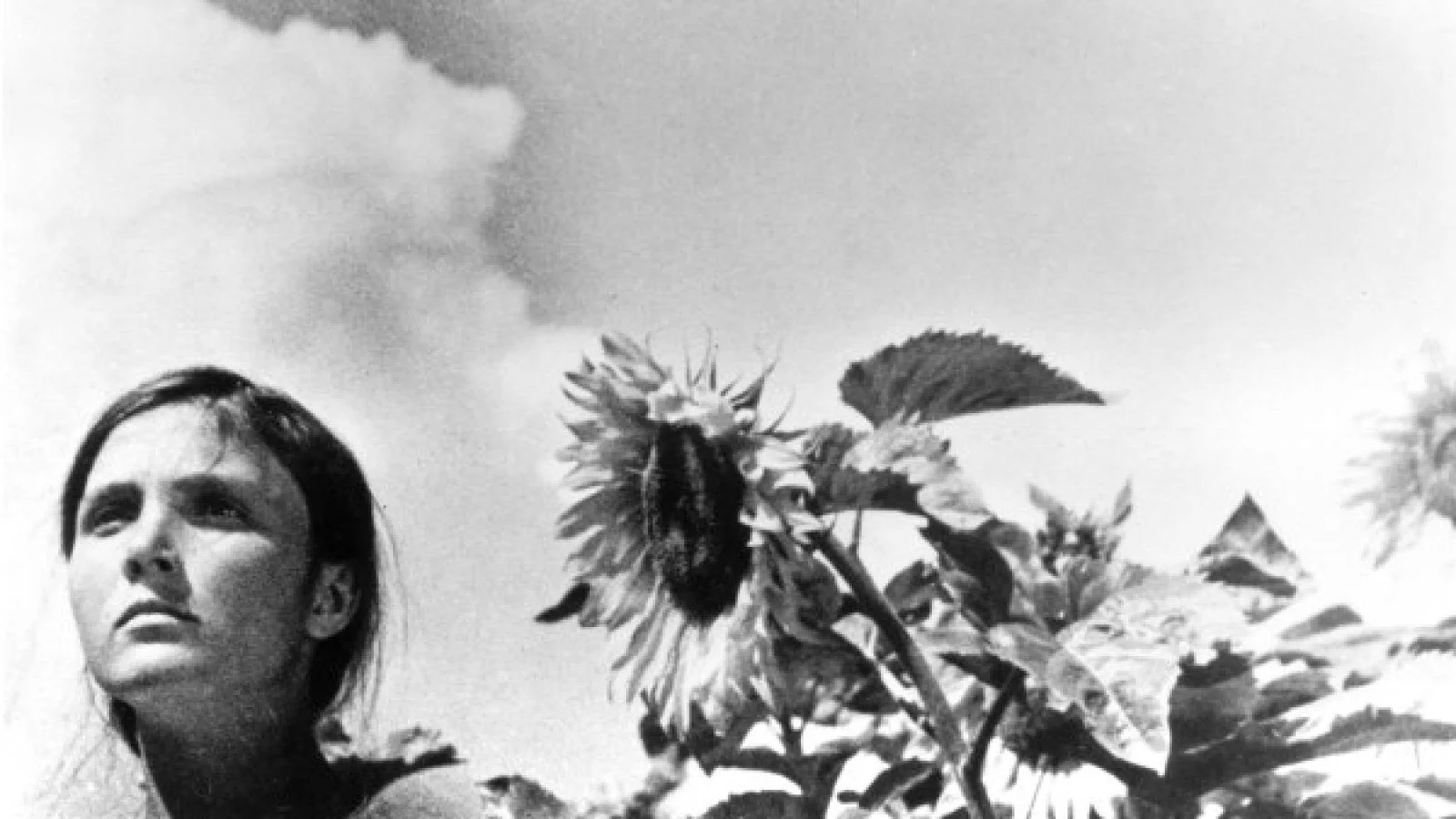
EARTH (wri & dir by Alexander Dovzhenko, Ukraine/USSR, 78mns, 1930)
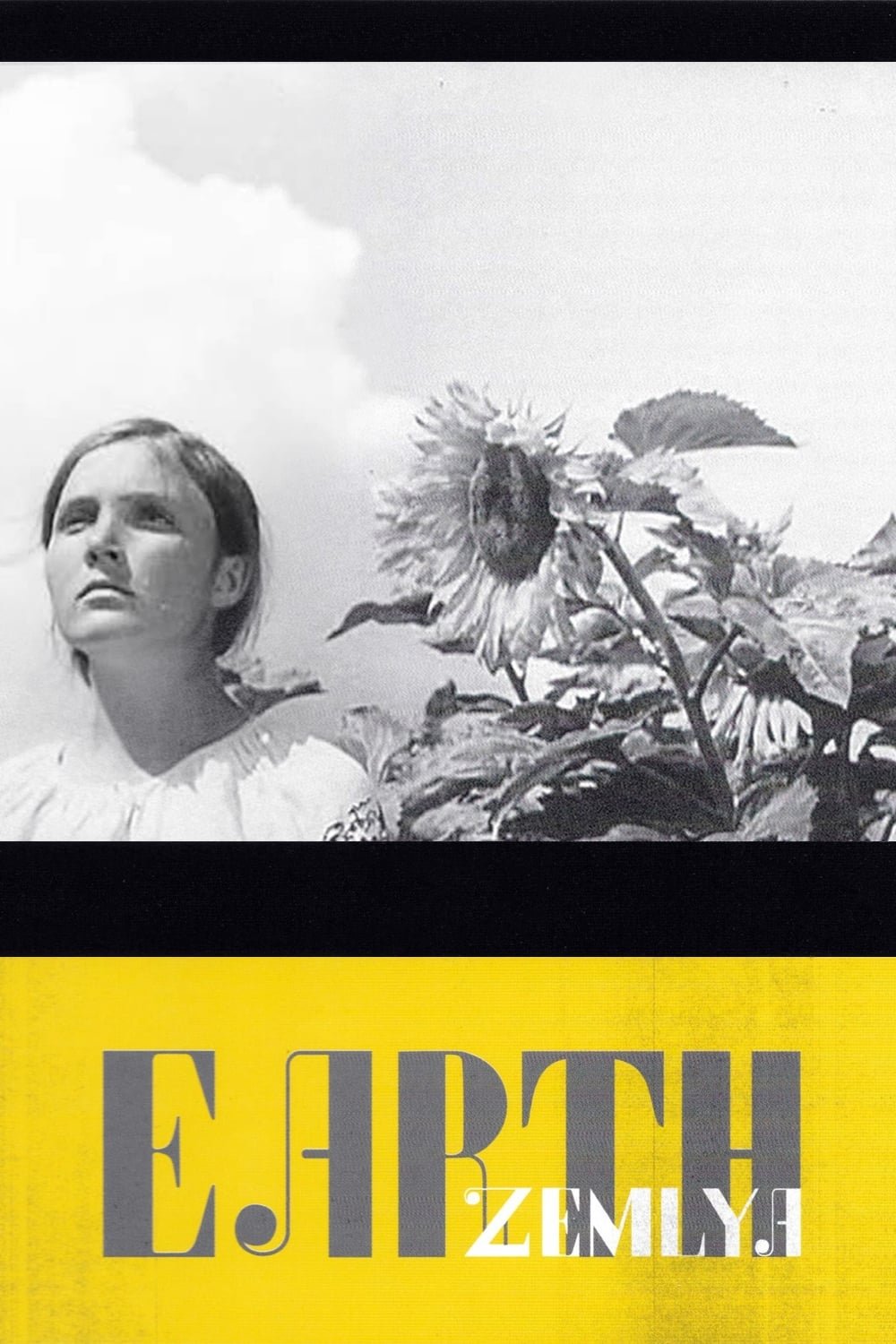
This writer found Ukranian moviemaker Alexander Dovzhenko's 1930 released EARTH, often hailed as his masterpiece, inscrutable.
In a glorious way.
That's not to say that there isn't a clear story and viewpoint here. There is. EARTH, a silent Soviet movie in the idea-based editing montage tradition of Eisenstein, Pudovkin, and others, tells the story of a Ukranian village that commits to farming collectivization. The people, lead by enthusiastic young true believers turn to communist ideals of progress and technology while repudiating old systems of orthodox religion and oppression at the hands of rich landowners.
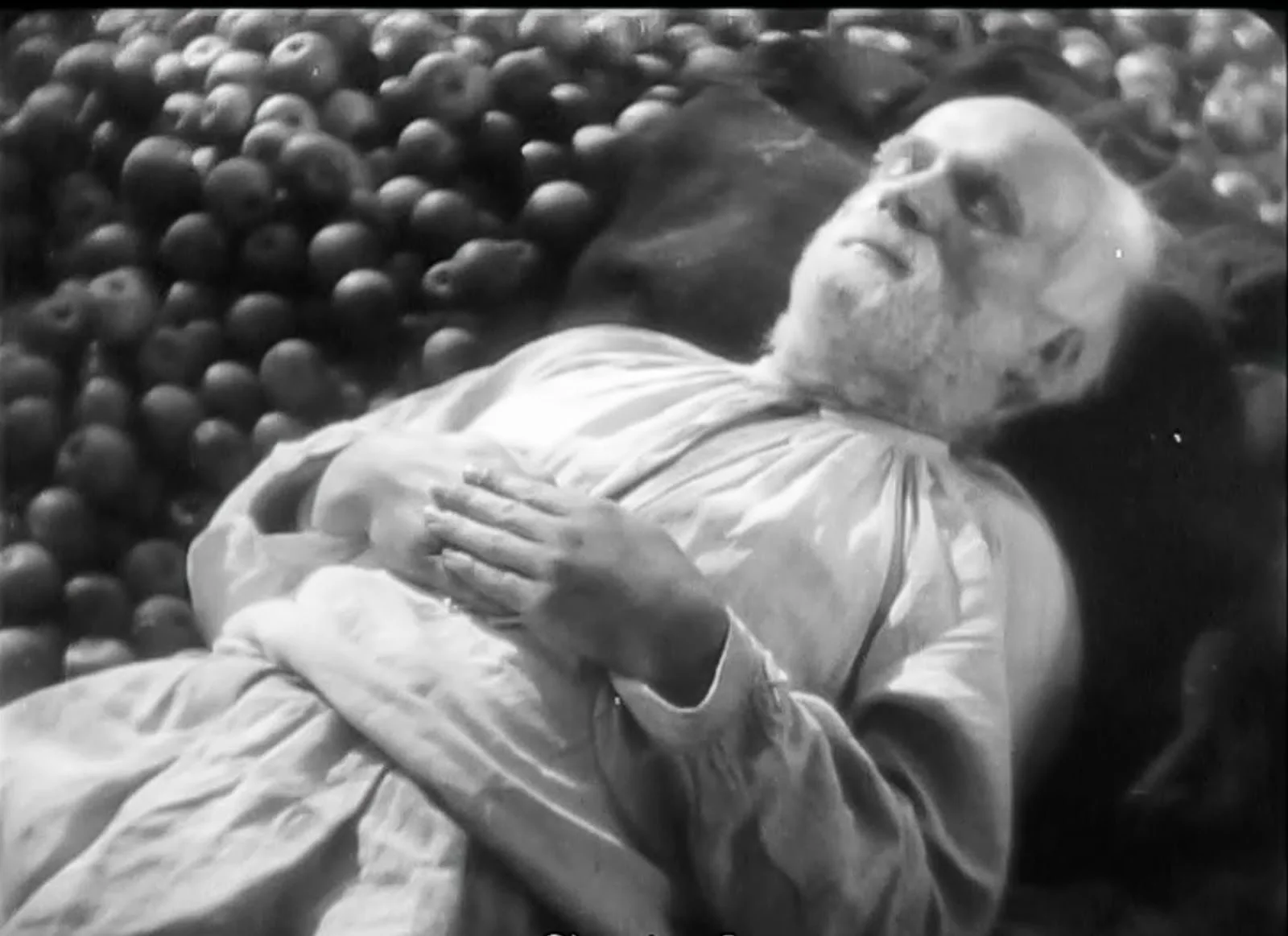
Yet, there's something else going on in EARTH. The movie starts with a sequence of an old man peacefully dying amongst the wheat and fruit harvest. There are beautiful shots of Ukranian hills of golden grass swaying in strong winds. A friend asks for a message from the beyond when the old man gets there.
This opening is doubled in the movie's closing with another death and funeral. And while the message might have been intended to contrast the old with the new, there's some kind of continuity and sense of transcendent throughline too.
When one of the young leaders promoting progress, Vasili is shot and killed by the son of a rich landowner, there follows a stunning sequence of cross cutting of the people leading a people's funeral, Vasili's fiance naked in her room lamenting his death, a pregnant woman giving birth to a child, and the murderer going crazy at his own irrelevance and ultimately rolling around on the earth he no longer has the power to withhold from the people.
In other words, yes, EARTH is a movie clearly made to celebrate and promote soviet ideals of collectivization but there's a deeper, less ideological, more profound ineffable conversation about life itself being had here.
The movie is a series of strikingly edited sequences that develop montage ideas through contrasts, cross cutting, dynamic alternating shot selection, tempo, rhythm, image size. The building blocks of dialectic movie cutting.
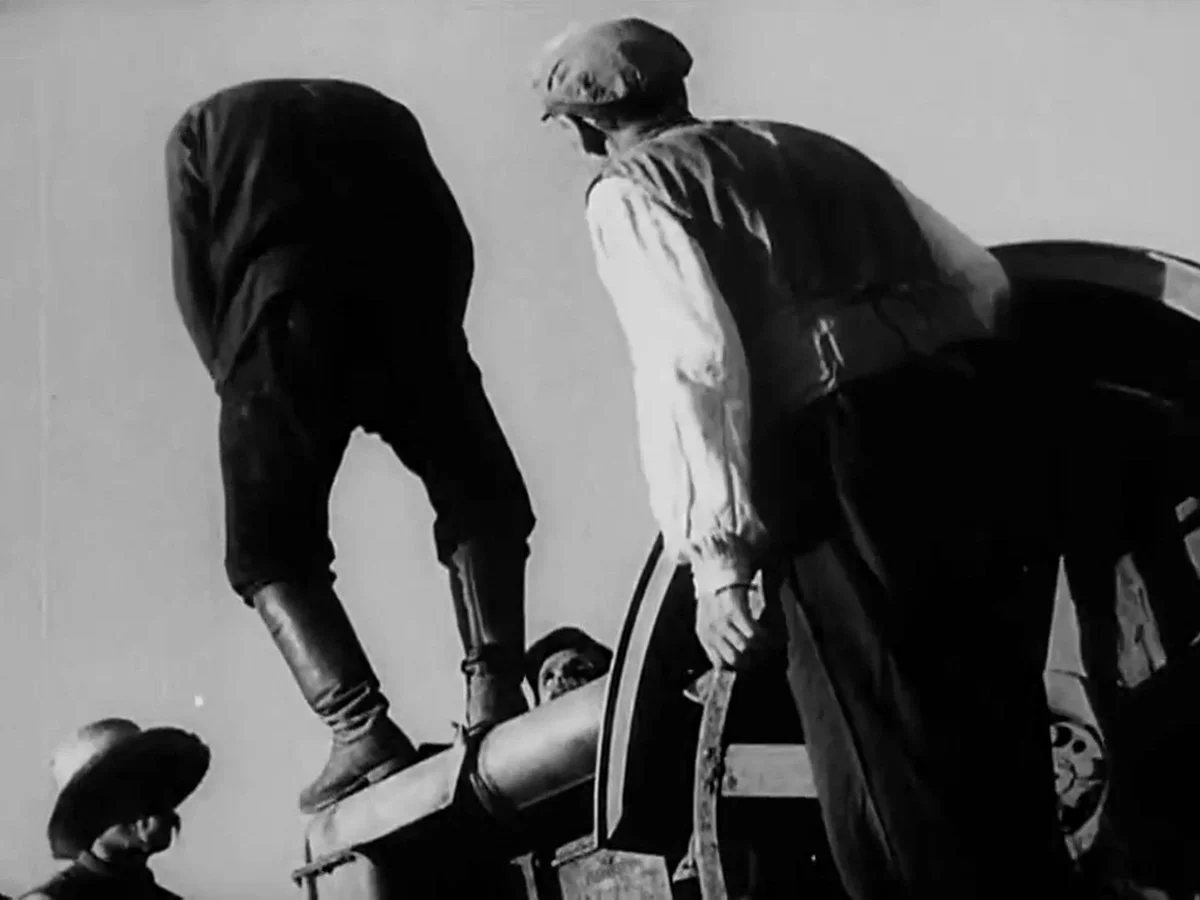
There's a primal force that drives the entire movie. This writer was less moved by ideas of farm collectivization than by the cinematic representation of a people's connection to its land. How their life force is informed by and reflected in their surroundings. And even though there is a clear repudiation of organized religion in the movie, the movie nevertheless feels deeply spiritual.
Regeneration, reincarnation, existence beyond life and death, all feel like unspoken themes.
Still, no matter what one ultimately takes away as the message of the movie, the movie's command and exploration of cinema language may be its real core message.
The sequence of Vasili's murder is incredible. The young man, excited by the village working together to make bread, dances through the streets at midnight only to be shot down at the crossroads by a cowardly assassin. The body falls in the dust. The killer flees. There's stillness.
This juxtopposition-ecstatic movement followed by ominous calm-defines the movie's cinematic approach of contrasts.
Images, scenes, emotions are cross cut, juxtopposed. Hundreds of villagers gather for Vasili's funeral in a show of vitality and numbers. This is cross cut with a single priest cursing them in the darkness of his church. And these two scenes are cross cut with two different sequences of female creation and grief.
The four different scenes, cross cut together, with shots of charging horses, Ukranian land in the wind, form a kind of whirling dervish climax of the conflicting forces of life itself.
There's an irony in how the slower film language of early cinema showcased in EARTH allows us to see more clearly the exhilarating style and ideas of editing. Whereas the frenetic start to finish cutting that characterizes much of current cinema-while key to goosing a pace modern audiences expect-ends up creating a kind of cinematic mud.
It's true that after 100+ years of image language and grammar, the audience doesn't need, nor want, a minute when five seconds will communicate the same information.
But movies like Dovzhenko's EARTH, almost a century old, still argue that clarity is a key component of successful experimentation.
Craig Hammill is the founder.programmer of Secret Movie Club