
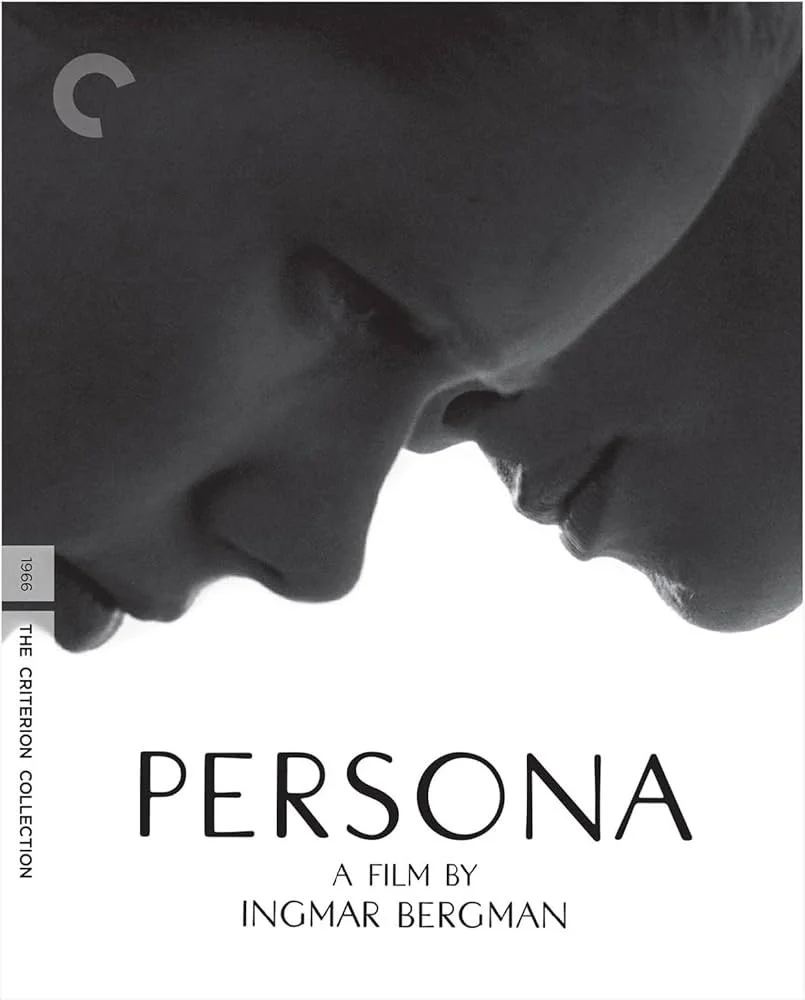
PERSONA (wri & dir by Ingmar Bergman, with Liv Ullmann, Bibi Andersson, Gunnar Bjornstrand, cinematography by Sven Nykvist, AB Svensk Filmindustri, 83mns, Sweden)
*Part of Secret Movie Club's Top 1000. A ridiculous number we know. But there are easily 1000 must see movies in cinema. Probably many of thousands. But this number feels right to us.
When you experience a towering creative work like Ingmar Bergman's PERSONA, you sometimes start to try to figure out what sets it apart.
So many able talented skilled moviemakers have made films about a strange co-dependent psychological relationship between two or three people. Why does PERSONA rise to Mt. Olympus levels?
A few key thoughts hit right away:
-The style. Bergman, already twenty plus years into his career, had honed his craft. He had a true magic bag of cinema tricks and he used many of them here in exhilarating new ways. The movie opens with a wordless montage of strange, sometimes shocking images. We see a boy with glasses. It's hard not to feel this is some kind of prologue that establishes Bergman as wrestling with his key obsessions-movies, women, God or no God. But we're never told what it means.
Though the rest of the movie (mostly) is told in (an equally) striking character-story style, style and form, the mastery and control therein, suffuse the entire film.

The movie that launched a thousand variations…
-Bergman's dual work as a film and theater director feels like a cross-pollination that creates a hybrid ability only a select few other movie directors (Welles, Fassbinder, Kazan, Murnau...) possess.
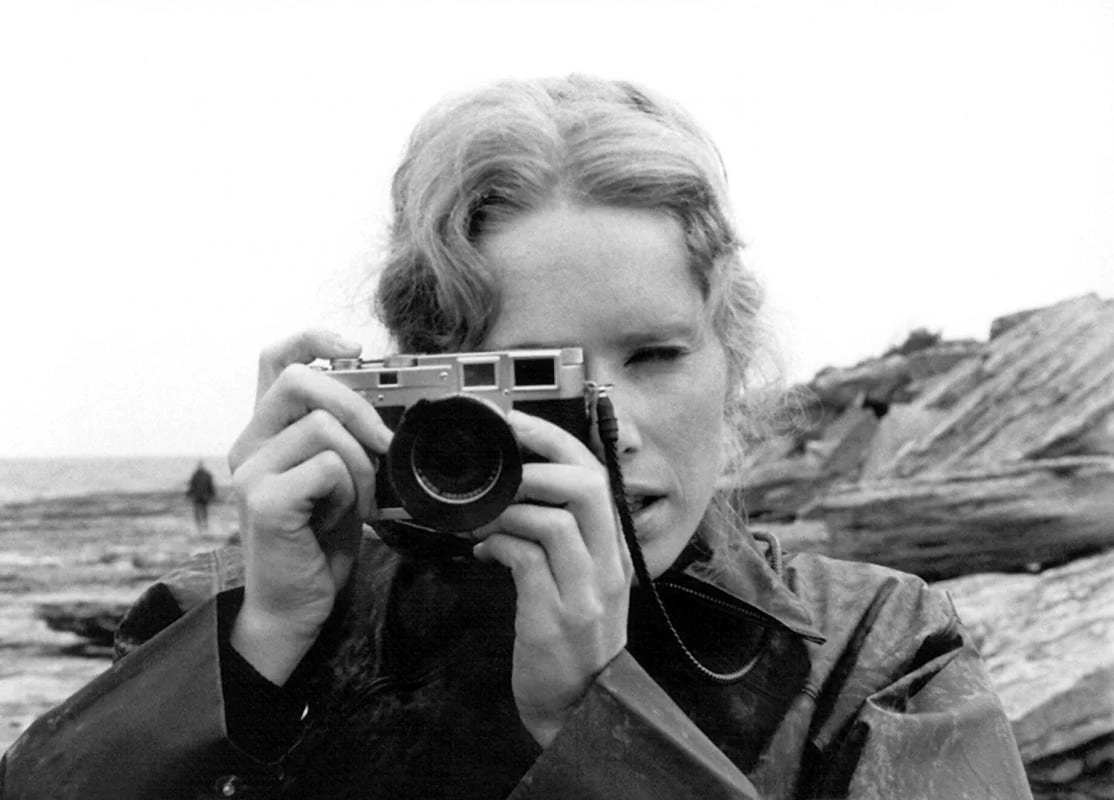
The story here follows actress Elizabeth Vogler (Ullmann in her 1st Bergman role) who, from shock of the violence of the world in the mid-1960's, has a breakdown and refuses to speak. Her nurse, Anna (long time Bergman rep regular Andersson), takes her to a small rocky coastal beach cottage to recover. The two only have each other.
For almost the entirety of the movie, Anna does the talking. Strangely you rarely think about this. Bergman is so skilled at scene craft, story, act dynamics, etc that you're just enraptured with this story of the power dynamics between these two very different women.
Anna's over sharing climaxes in a stunning minutes long monologue about an explicit sexual experience she had with boys on a beach.
You feel Bergman in full possession of his cinematic powers. He's exploring what it means to talk and to listen.
We sense, uncomfortably, that Elizabeth may be using her "silence" as a convenient front to play with and psychologically manipulate the more believing and trusting Anna.
When the Women part ways at the end of the movie, it's hard to exactly distinguish who influenced who, who had power over who, etc.
Bergman, matched possibly only by Fassbinder (in our opinion), was peerless when it came to crafting low budget stories that required only a few locations and a few actors, yet could be wildly different in focus, genre, approach.
-Finally, whether competitiveness with emerging 60's cinema voices like Jean Luc Godard, or perpetual dissatisfaction with his own work, or both, is at play here, Bergman makes this movies as someone who has something to prove.
Bergman was the raging, petulant, enfant terrible well into old age. He never lost the fire. Maybe a few too many folks got burned.
Bergman had been the cultural flavor of the moment for a few years in the late 50's, maybe even early 60's. But by 1966, when PERSONA was released, he was already viewed as a bit of the old guard with "younger" or "newer" world cinema voices like Godard, Antonioni, or even the British Angry Young men voices of Richardson and Anderson taking center stage.
Let’s get meta.
As fascinating as Bergman's previous major movie THE SILENCE (1963) had been, it felt like a variation or attempted culmination of a cycle that had started with THE SEVENTH SEAL (1957). Bergman's strained attempt at comedy ALL THESE WOMEN (1964), his first movie in color, is often considered one of his worst. For this writer, it isn't that WOMEN is bad (it aint' good but it's still pretty watchable), it's more that it feels strained, adrift, passive aggressive, and "safe".
Bergman must have gotten the memo because PERSONA feels like a re-set and a debut at the same time. It's always a dicey proposition when an older moviemaker wants to show "the kids" how it's done. But Bergman, the seasoned moviemaker, maybe because he's really punk rock at heart, does just that here.
No Godard or Antonioni movie, in this writer's opinion, has been as truly revolutionary (from a cinematic point of view) as PERSONA.
It's like when James Joyce published ULYSSES (1922) or Picasso painted "Les Demoiselles d'Avignon" (1907). If you had followed their classical work prior to this, you'd know that their shocking modernism was rooted in ridiculous profound craftsmanship. Same with Bergman. PERSONA shocks and resonates because it's made by someone steeped in Shakespeare, Ibsen, the classics.
***
PERSONA traffics in sexuality, eroticism, human psychology, modern montage. It's its own sketchbook of experiments.
Like Helen, PERSONA launched a thousand moviemakers. You see PERSONA in Robert Altman's 3 WOMEN, in David Lynch's MULHOLLAND DRIVE, in Darren Aranovsky's BLACK SWAN, in Joachim Trier's SENTIMENTAL VALUE. . .
But ultimately, like so much great work, whatever its antecedents and its descendants, PERSONA is sui generis.
That is it's key secret: that greatness lies in creatives who have honed their talent through endless hours of craft to finally arrive at the confidence to blow it all up and do something guided by the earnest brutal invisible queer beacon of their own idiosyncrasy.
Craig Hammill is the founder.programmer of Secret Movie Club