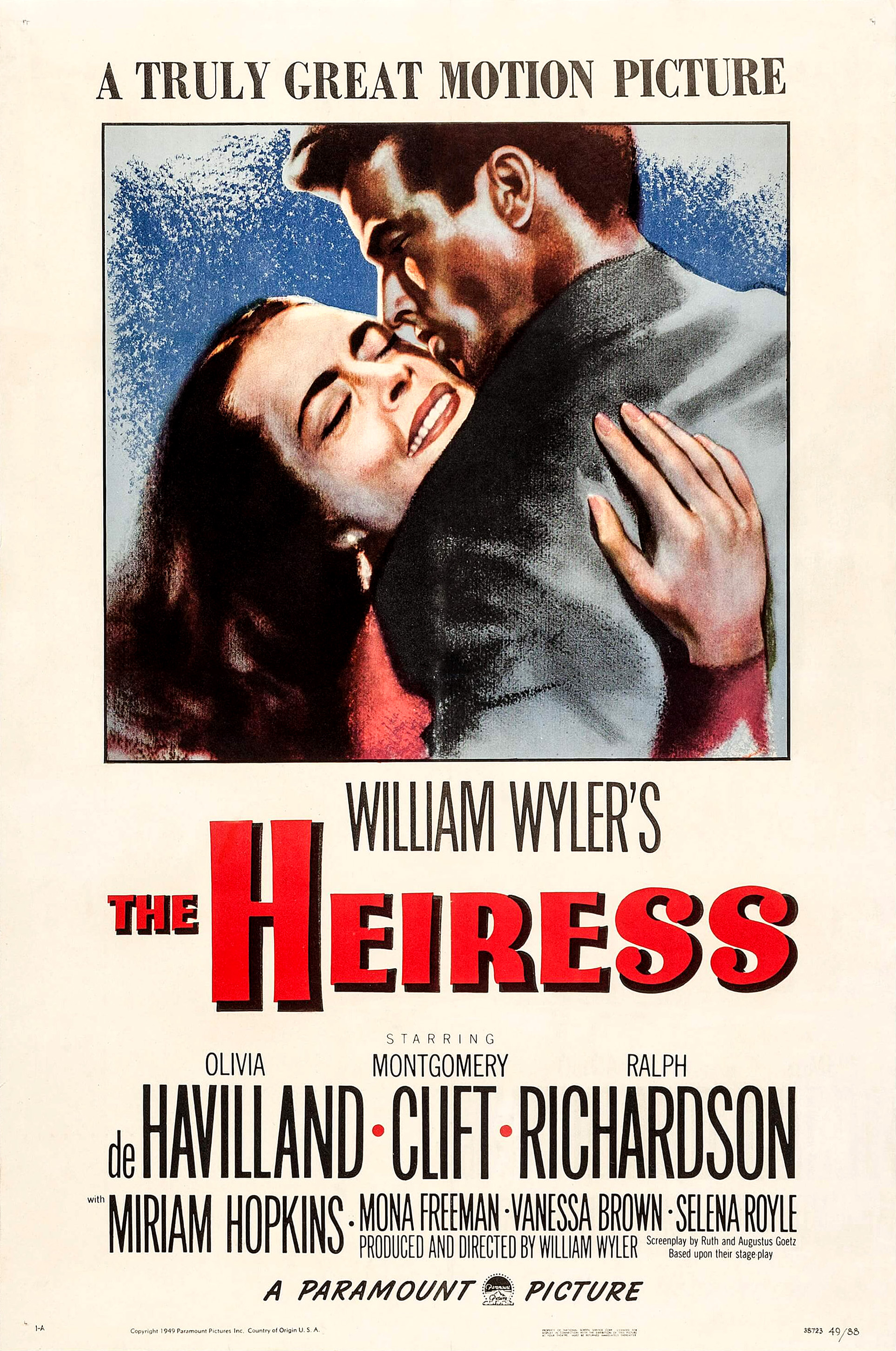
THE HEIRESS (dir by William Wyler, w/ Olivia de Havilland, Montgomery Clift, Ralph Richardson, Paramount, 115mns, USA)
Part of Secret Movie Club's Top 1000. A ridiculous number we know. But there are easily 1000 must see movies in cinema. Probably many of thousands. But this number feels right to us.
A movie of bracing emotional violence, William Wyler's THE HEIRESS is another proof that classic Hollywood was making movies as bold (if not sometimes more bold) than anything being made today.
Based on a Henry James novella adapted to a Broadway play adapted to this movie, THE HEIRESS has the primal power of a classic Greek tragedy.
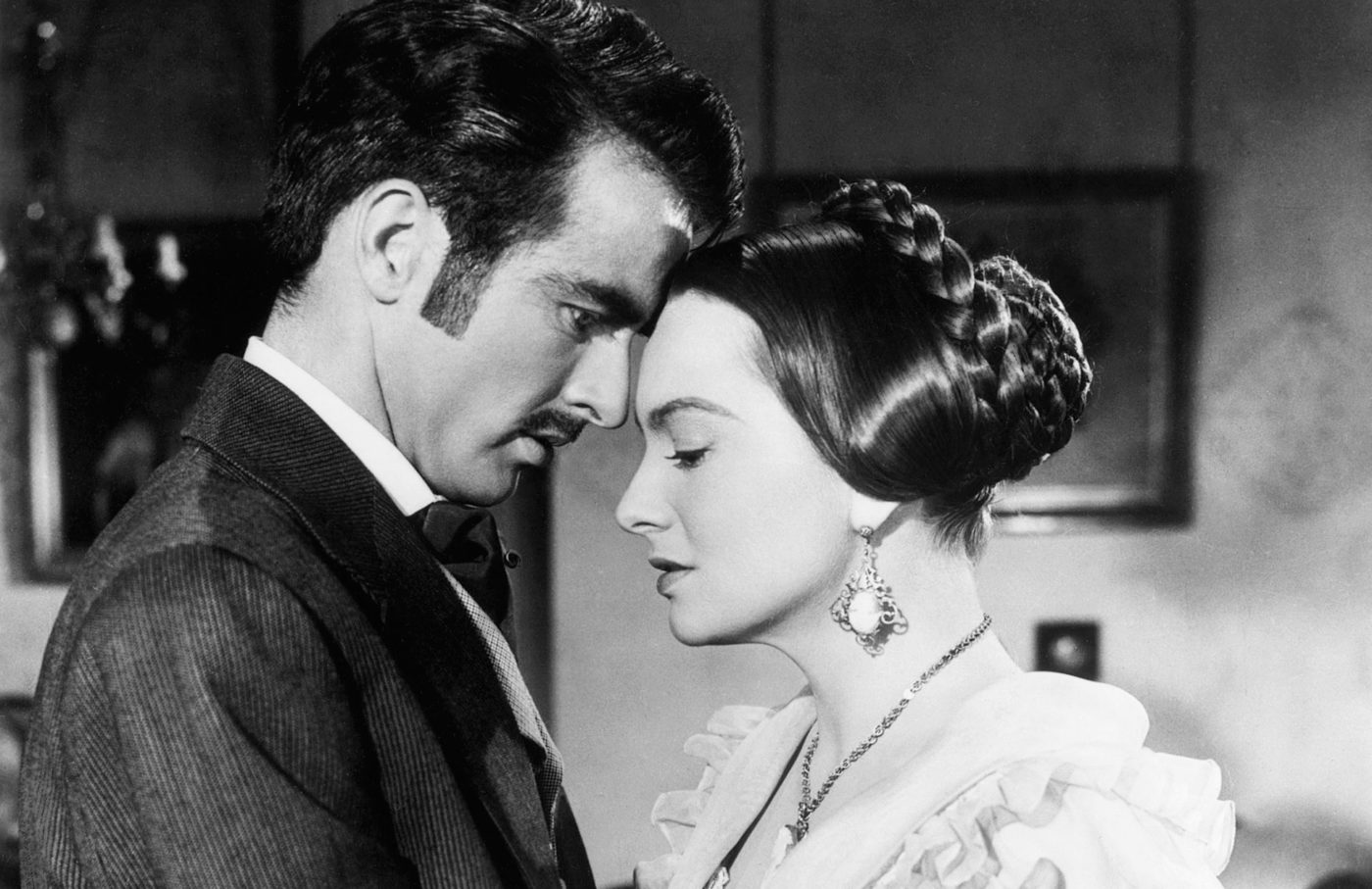
Dutiful and overly trusting daughter Catherine (de Havilland who won the Best Actress Oscar) is considered unmarriagable by her widowed resentful father, Dr. Sloper (a terrifying Ralph Richardson). But when she meets handsome, personable Morris Townsend (a never better Montgomery Clift), a real romance seems to bloom. But questions of Morris's real intentions given Catherine's wealth threaten to derail everything.
De Havilland does a stunning job changing from a woman who at first is too trusting, too shy, too transparent, too vulnerable to becoming a hardened woman who has learned cruelty "from masters".
This is a movie about people who aren't villains exactly yet lay waste to all around them through emotional brutality.
Catherine's father, Dr. Sloper, is a model of etiquette but also of passive-aggressive rage. Ralph Richardson gives a terrifying performance as a man who finds his daughter a poor substitute for his wife. And thus views everything she does as inadequate compared to the woman from whom she came.
While Catherine's Father may (rightly) suspect that Morris's love is influenced by Catherine's fortune , Dr. Sloper shows no real empathy or understanding for his daughter's excitement at finally being doted on.
In fact, he may secretly be covetous and envious.
Montgomery Clift (still very early into his career) as Morris is pretty inspired. Originally the part was meant for Errol Flynn who declined. And thank God he did. The entire movie would play differently with Flynn's womanizing masculinity.
Clift plays Morris as a charming, personable, if shallow young man. The whole movie you struggle to figure out if Morris truly loves Catherine or if he only loves what Catherine can provide for him. This tension makes Catherine's struggle understandable. We're struggling too.
And composer Aaron Copland's score understands the American operatic nature of the material.
What elevates the movie to all-time great is William Wyler's precise direction. Wyler's style is strangely akin to a mix of David Fincher and Yasujiro Ozo. Pure cinema, no frills. Just essence.
When Wyler really locks in, as he does here, and in THE BEST YEARS OF OUR LIVES, ROMAN HOLIDAY, BEN HUR, there is a kind of cinema that is breathtaking in its focused intensity.
Wyler uses mirrors and three way deep focus triangular staging to show the isolating results of the self-involved motivations of all the characters. So many shots feel like 3 or 4 way duels at the end of a Sergio Leone movie. Only here the bullets are words and unspoken motivations.
There's a precise choreography to movement, camera blocking that enriches (as truly great style must) the emotional core of the story.
It all builds to an ending (which we won't spoil) that is a stunner.
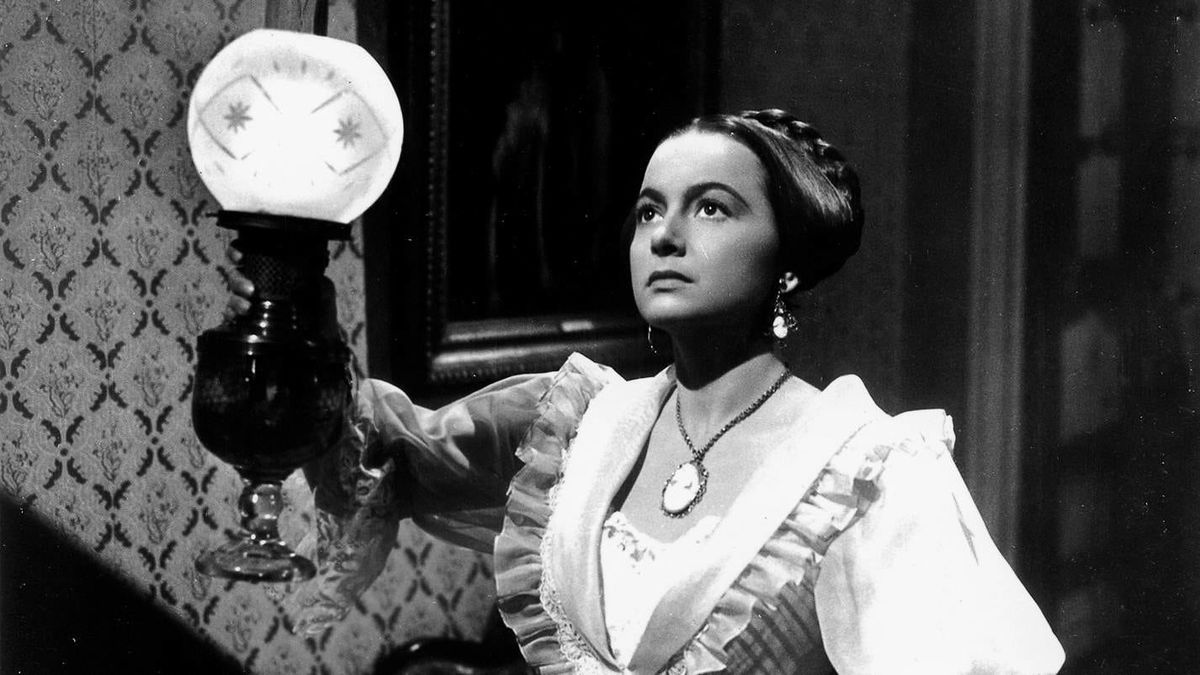
This movie so influenced Martin Scorsese you see its fingerprints on both THE AGE OF INNOCENCE and KILLERS OF THE FLOWER MOON.
Catherine, almost horrifically (for it plays like a horror movie of the soul), comes to see how she's been abused and used by the men around her. This leads to one of the greatest changes in character this writer has ever seen in a movie.
It works so well because De Havilland communicates Catherine's softness so completely in the first part that Catherine's shift to hardness in the second part has the weight of a tragic death.
Yet, something even more profound about human nature is communicated:
Moral and emotional cowardice not only ruin one's own life but damage the lives of those around them.
It's very hard to get a second chance once you've hurt someone to repair what's been lost.
We learn the meaning and values of life in real time and often only come to understand what's important when it's too late.
It's shocking that a movie like 1949's THE HEIRESS communicates this better then almost anything that has come out since.
Craig Hammill is the founder/programmer of Secret Movie Club.