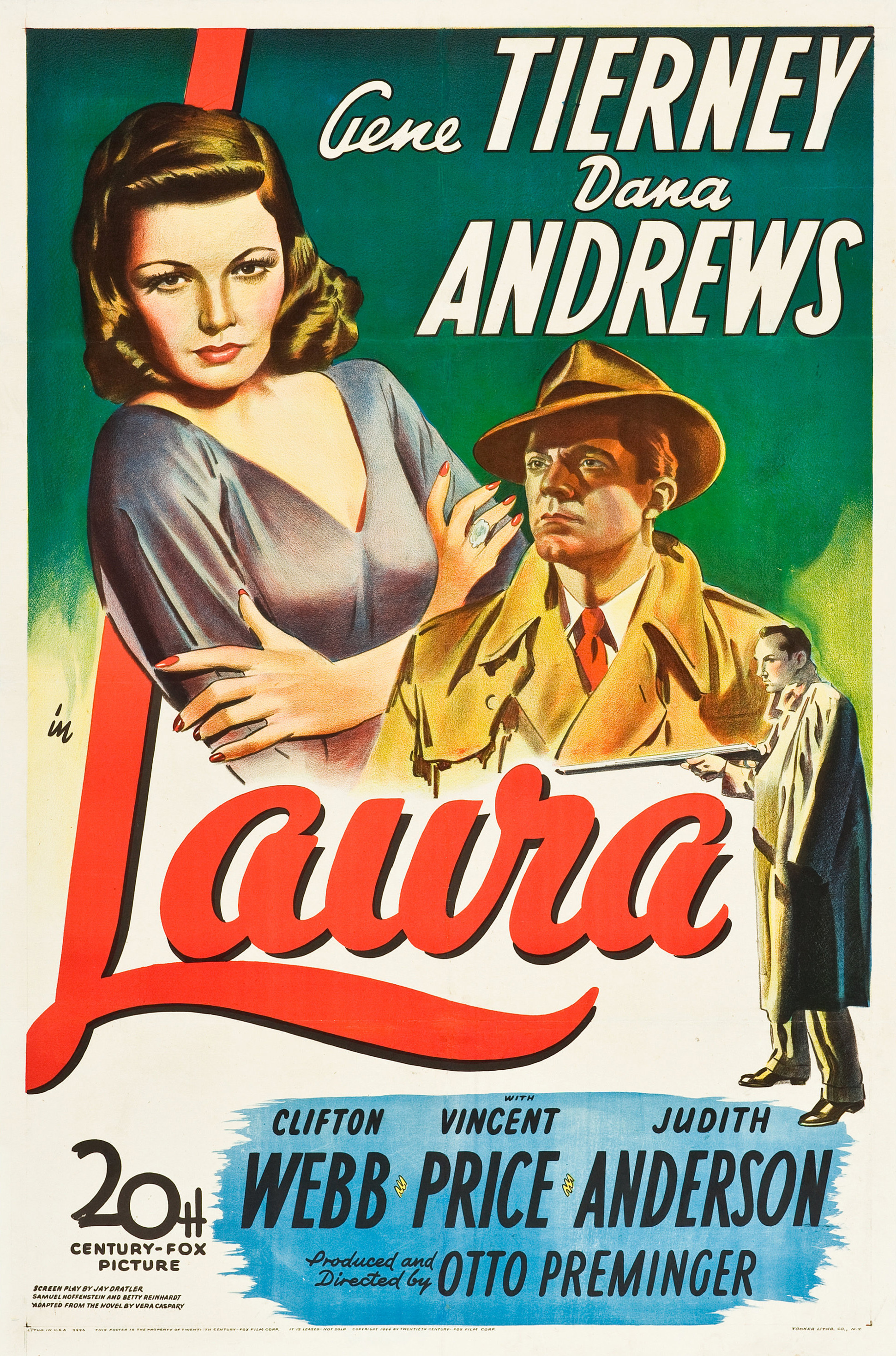
LAURA (prod & dir by Otto Preminger, w/ Gene Tierney, Dana Andrews, Clifton Webb, Vincent Price, 20th Century Fox, 88mns, USA, 1944)
LAURA is one of those movies with so many intriguing directions into which it could go. The direction it does go in is entertaining and moving, properly noirish and fatalistically romantic.
And yet, it may be what David Lynch and Mark Frost saw in the material that caused them to do a riff (in a much different direction) with TWIN PEAKS that is the most fabulous result of this very good movie.
First, let's talk about LAURA on its own merits. A noirish murder mystery in which Detective Mark McPherson (Andrews) must determine who murdered the desired and beautiful Laura Hunt (Tierney). Everyone around Laura seems like they could have done it. From her snobbish gossip columnist patron/suitor Waldo Lydecker (Webb) to her gigolo leeching fiance Shelby (Price). Hell, even her maid seems like she could have done it.
They are all affected and moved by Laura that much.
This includes Detective McPherson who bit by bit falls in love with the dead woman represented by her beautiful portrait which hangs over her fireplace in her chic apartment.
However (spoilers now so reader beware) when Laura returns to her apartment in the dead of night several days later, McPherson is there to meet her and unravel what has really happened. And who was really murdered and why.
From the moment Laura enters alive in the story, the movie pursues a thread that is satisfying, even emotionally moving. What happened and who the murderer turns out to be is tragic in a way. A comment on how the lonely, the never loved, the always left behind ache so bad for reciprocal love it may curdle into hatred, murder.
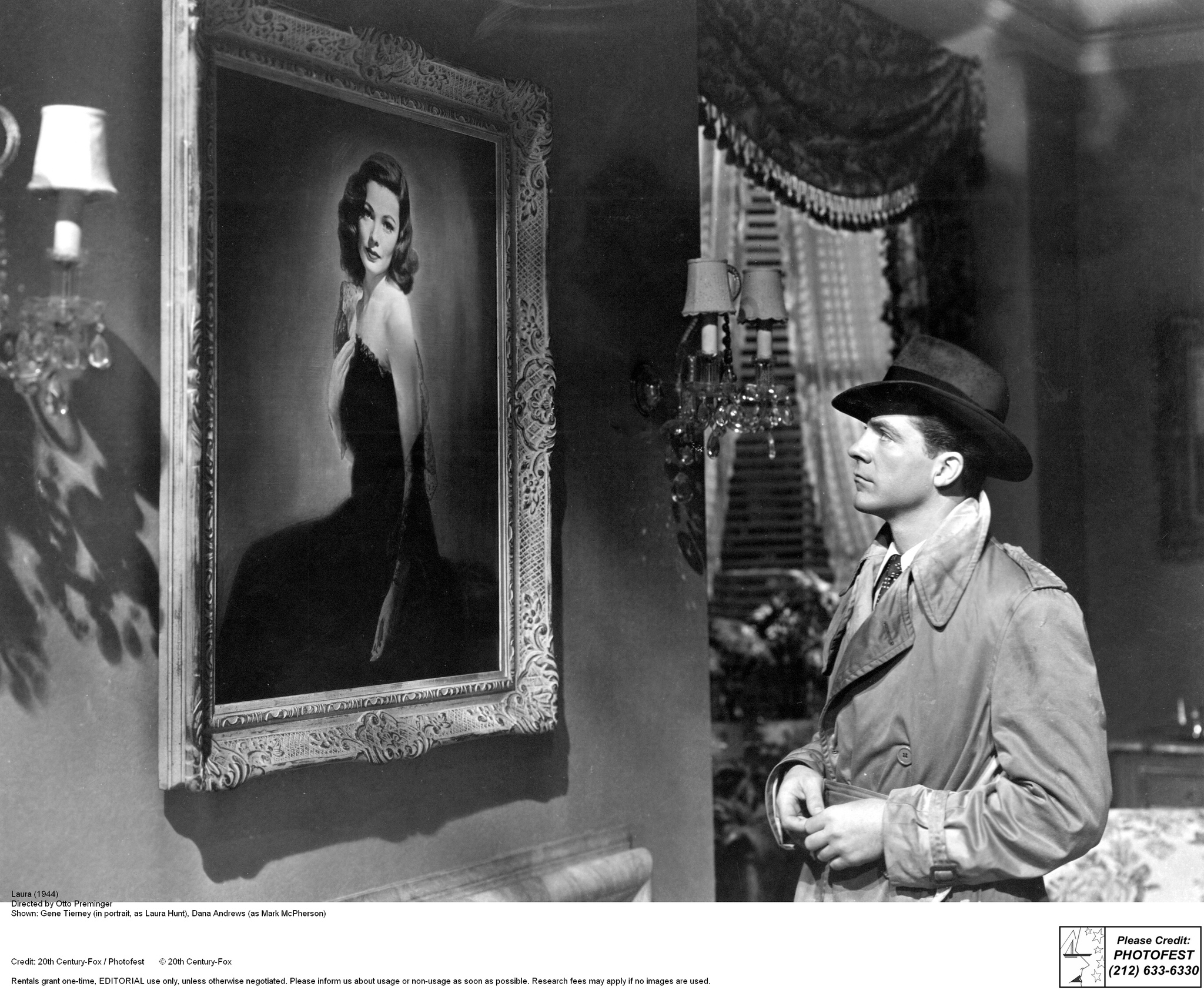
And the final sequence is a doozy, predicting the even darker deeper pools we'll dive into when noir goes full fatalism in the 1950's.
Yet this writer (who didn't know the twist) thought for a moment the twist might be that the whole second half was in Detective McPherson's head, a dream of what he wants to have happened. Only to wake up to realize Laura is still dead, forever unattainable.
This is a dynamite movie of vibe, atmosphere, style, performance. I do admire Preminger's pursuit of the darker, seemier ambivalence of existence. We see that here in the slightly amoral psychologies all the characters have (including Laura and the detective). I'm also a big fan of Preminger's ANATOMY OF A MURDER because it shows the law as it really works, not as we would want it to be.
What David Lynch and Mark Frost did in TWIN PEAKS was to commit to the promise of the premise of the original movie. In TWIN PEAKS, Laura Palmer (Sheryl Lee) really is murdered before the start of the story. Therefore we only ever see her in flashback. And when FBI agent Dale Cooper becomes obsessed with her, he encounters her only in dreams.
Whereas Preminger's LAURA ends in wish fulfillment (or audience expectations in a 1944 America that wanted happier endings), Lynch's TWIN PEAKS ends in existential reckoning.
This 1944 noir gem is full of "ah-ha" moments that connect it to TWIN PEAKS. The names of course (Laura Hunter-Laura Palmer). The singular effect of photos/portraits (Laura's painting/Laura's high school prom photo). The obsession the investigators get with the murder victim and the mystery itself, etc.
Add to that, wonderfully slippery performances from Webb, Price, all the supporting characters. And Detective Dana Andrews clearly falling in love.
1944's LAURA may not commit to its premise the way we with 2026 sensibilities may want it to. But it's still a helluva stylish noir with an integrity all its own. And, in a way, thank God for that because it allowed Lynch and Frost to take the unrealized potential and create one of the greatest works of cinematic art 45 years later with TWIN PEAKS.
Craig Hammill is the founder.programmer of Secret Movie Club