A VERY TCM WEEKEND: WHY CLASSIC FILMS AND TCM MATTER MORE THAN EVER by Matthew Gentile
Every April since 2010, Turner Classic Movies (TCM) has hosted a remarkable festival in Hollywood's heart. While Los Angeles offers numerous revival screenings, the TCM Classic Film Festival provides cinephiles something distinctive: experiencing classic films as intended—on large screens in historic venues, surrounded by fellow cinema enthusiasts. Many screenings feature special guests including legendary filmmakers, actors, historians, and TCM's knowledgeable hosts.
Like many film enthusiasts, the author grew up watching TCM. During screenplay work or film preparation, TCM typically plays mutely in the background as potential inspiration. For filmmakers and viewers alike, TCM has proved invaluable, raising awareness alongside resources like the Criterion Channel about cinema's vast, explorable landscape for future generations.
The author's first TCM Festival attendance occurred in 2015 as an American Film Institute student receiving complimentary passes. Two memorable screenings followed: late director William Friedkin introducing THE FRENCH CONNECTION at the TCL Chinese IMAX, and octogenarian Sophia Loren introducing MARRIAGE: ITALIAN STYLE, receiving an enthusiastic standing ovation. The excitement created lasting motivation for such experiences. Watching Saturday Night Fever on television during college versus experiencing it at TCM Fest with director John Badham present proved transformative—when the opening track played before a packed crowd, the entire audience seemed transported to 1977 Brooklyn.
The author attends TCM Fest annually when possible, considering it optimal for viewing restorations, rare prints, archival materials, and hearing from creators or knowledgeable historians. In our rapidly changing world, this connection to cinema's roots proves essential.
TCM programs approximately 80-90 films across four days at multiple venues: the TCL Chinese Theatre, the Egyptian, the Multiplex, and the Hollywood Roosevelt poolside. This offers festivalgoers numerous viewing options and conversations.
Day 1: A Conversation with Guillermo del Toro and the British Film Institute
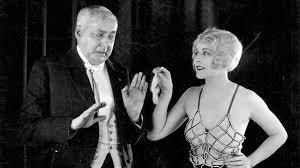
The festival opened with an inspiring conversation celebrating the BFI's 90th anniversary. CEO Ben Roberts discussed the organization's immeasurable cinema contributions with del Toro, highlighting significant British Cinema restoration initiatives. These included the Hitchcock 9 (restoring all nine surviving silent films including THE PLEASURE GARDEN and THE LODGER), and GASLIGHT (1940), directed by Thorold Dickinson and starring Anton Walbrook—which preceded George Cukor's more famous MGM remake. Del Toro humorously observed that Hollywood's remake tradition existed long before contemporary practice.
The author's primary takeaway involved recognizing del Toro's limitless artistic passion—similar to Martin Scorsese's. Despite substantial personal accomplishments, del Toro prioritized discussing British cinema rather than his own achievements. He highlighted Michael Powell's sacrifices as a filmmaker, emphasizing how Powell faced considerable derision for directing the groundbreaking PEEPING TOM. Del Toro also explored how success potentially becomes problematic for creative individuals through the natural impulse to replicate prior achievements.
Day 1: Misery (1990) with Rob Reiner and Kathy Bates
The author had never experienced MISERY before this 35th-anniversary screening. Having the opportunity to see it theatrically with a crowded audience enhanced the experience considerably. After the film concluded, director Reiner and actress Bates appeared onstage; Reiner expressed happiness about hearing audience reactions—gasps and laughter—demonstrating the film's continued theatrical effectiveness.
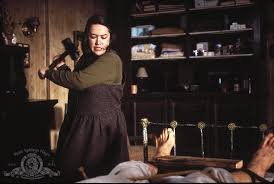
TCM Host Dave Karger conducted an illuminating interview covering casting and production processes. Throughout their discussion, Reiner's abilities as an actor-focused director became apparent. While Bates felt intimidated by Annie Wilkes, recognizing personal similarities, Reiner reassured her by saying: "You have to trust you have one of the great acting instruments of all time and you can leave that character here at the studio and go home and be yourself." Such sensitivity regarding the acting process proved crucial for their collaboration.
The discussion revealed an extensive casting process for James Caan's role, with numerous major actors declining before acceptance. The list included William Hurt (twice), Kevin Kline, Michael Douglas, Harrison Ford, Robert DeNiro, Al Pacino, Richard Dreyfuss, Gene Hackman, and Robert Redford before Warren Beatty, who developed the screenplay with them. Screenwriter William Goldman crafted the script; Beatty provided a significant breakthrough by recognizing MISERY fundamentally as a "prison movie" rather than horror or thriller material. After script modifications emphasizing this through-line, Beatty withdrew, but Caan's subsequent involvement proved definitive.
Caan and Bates approached their roles differently—Caan as established movie star, Bates as successful theater actress transitioning into cinema, desiring extensive rehearsal whereas Caan preferred minimal preparation. Reiner negotiated middle ground, with resulting performances demonstrating effectiveness.
Barry Sonnenfeld's cinematography impressed the author particularly—featuring low angles, moody lighting, and similarities to the Coen Brothers' directorial debut BLOOD SIMPLE (which Sonnenfeld also photographed), utilizing tight claustrophobic close-ups building tension effectively.
Day 1: The American President (1995) with Rob Reiner & Aaron Sorkin
Ben Mankiewicz introduced this 30th-anniversary celebration featuring Michael Douglas and Annette Bening. Robert Redford originated the project with three words: "the president elopes." When Reiner accepted the directing role, he collaborated with Sorkin following their successful A FEW GOOD MEN partnership. According to Sorkin, upon entering Redford's office, he received multiple previously written scripts with instructions to select one for rewriting. With self-described boldness, Sorkin requested creating original material instead.
Weeks later, Sorkin delivered a script exceeding three hundred pages. Reiner and Sorkin collaboratively edited it down; while Sorkin initially resisted eliminating content, much material subsequently appeared in THE WEST WING—unsurprising after viewing this film.
Following Redford's withdrawal, only two actors received serious consideration: Michael Douglas (whose 1990s filmography remained unparalleled) and Warren Beatty (whom they realized possibly departed because his spouse would play the lead).
The author's primary lesson from Sorkin's anecdote involved recognizing that excessive writing proves beneficial—even when inevitable cutting occurs, lost material may generate alternative creations. Therefore, continuous writing matters.
Watching the film with an enthusiastic crowd, experiencing how its themes resonated deeply—with audiences applauding triumphant third-act speeches—created nostalgia for mid-budget adult films and reinforced comedy's necessity for theatrical experience.
Day 2: The Private Life of Henry VIII (1934)
The BFI's Kieron Webb introduced this restoration of Alexander Korda's 1933 film featuring Charles Laughton and directed by Korda, a Hungarian-born British mogul. When Korda presented the brilliant script by Lajos Biro and Arthur Wimperis to financial backers, initial interest remained limited. Despite this, Korda persevered, eventually securing United Artists and Italian impresario financing. They produced this period film on an extremely modest budget—potentially representing prestige independent cinema before such terminology existed in Hollywood.
The gamble succeeded financially and internationally. Charles Laughton's Academy Award-winning performance made this the inaugural foreign film receiving an Oscar. Watching Laughton demonstrates his commanding presence. Korda's sensible direction impressively navigated tonal shifts between character-driven black comedy and tragic melodrama.
Day 2: Gunman's Walk (1958)

Eddie Muller introduced this newly restored, vastly underrated Western directed by Phil Karlson, featuring Van Heflin and Tab Hunter in exceptional performances, with screenwriting by Frank S. Nugent (who also wrote THE SEARCHERS).
Like THE SEARCHERS, this film addresses complicated family, legacy, and race-relations themes apparently ahead of its era. Both Heflin and Hunter portrayed antiheroes—Heflin as a wealthy, respected rancher whose arrogant, hot-tempered son (Hunter) kills someone, confronting consequences and guilt about parenting mistakes. The screenplay demonstrates Heflin's character as an enabler while maintaining compassionate understanding of his blindness regarding personal failures.
Hunter delivered equally impressive antihero work resembling James Caan in THE GODFATHER and Toshiro Mifune, demonstrating elaborate physicality and capacity for explosive emotional escalation. Charles Lawton Jr.'s cinematography proved remarkable, with gorgeous Technicolor depicting sweeping landscapes. The film reportedly moved notoriously tough studio executive Harry Cohn to tears. The climactic sequence, intentionally undescribed, represents some of cinema's finest work.
Day 3: The Talk of the Town (1942)

Before this George Stevens restoration, TCM's Alicia Malone interviewed George Stevens Jr. This picture featured Cary Grant, Jean Arthur, and Ronald Colman at peak performance, following a wrongly accused fugitive (Grant) hiding in a small-town house owned by his former schoolmate (Arthur), soon occupied by a legal scholar (Colman). Fundamentally a romantic comedy, the film poses philosophical questions about intellect versus emotion.
Stevens' work impresses through his characters' emotional depth and his similar treatment of comedic and suspenseful elements. According to Stevens Jr., his father disliked the term "screwball comedy." His approach stemmed from Laurel and Hardy collaborations, learning that comedy could be graceful while remaining character-grounded.
The film resonated with enthusiastic audiences, generating laughter and, like THE AMERICAN PRESIDENT, prompting applause during profound speeches. At 82 years old, this film addresses contemporary concerns directly.
Before the interview, Stevens Jr. told Malone: "My father always had this idea about films…that what was important was not how good or popular they were in the year they came out…but would they stand the test of time?"
The author believes these films have endured, and perhaps observing them across generations in packed theaters reveals this art form's genuine reach. Maintaining connection to classical Hollywood cinema remains essential, with TCM representing more than a channel or festival—it constitutes a cultural institution.
MATTHEW GENTILE is a director and screenwriter based in Los Angeles. His first feature, AMERICAN MURDERER, stars Tom Pelphrey, Ryan Phillippe, Idina Menzel, and Jacki Weaver and was distributed by Lionsgate/Saban and Universal. You can follow him on Instagram at @matthewgentiledirector or his website: www.matthewgentiledirector.com