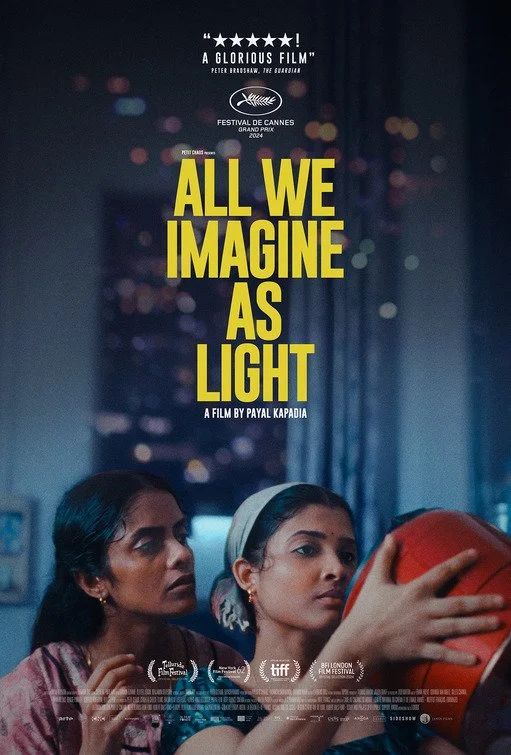
FELLOW TRAVELLERS: Payal Kapadia's ALL WE IMAGINE AS LIGHT (wri & dir by Payal Kapadia, in Malayam, Hindi, Marathi, winner of the 2024 Cannes Grand Prix, 118mns, India/France)
A beautiful movie about the lives of three Indian women—Prabha, Anu, and Parvathy—who work at a hospital clinic in Mumbai, ALL WE IMAGINE AS LIGHT is a quietly daring movie about female independence and agency in a culture straddling ancient traditions and rapid modernity.
Written and directed by an Indian woman and winner of last year's Cannes Grand Prix award, ALL THAT WE IMAGINE AS LIGHT is that rare recent film that feels like a FILM-cinematic, unpredictable, yet filled with tremendous ambition and control of the form. Though very different, it could easily pair with Joachim Trier's 2021 THE WORST PERSON IN THE WORLD—another recent standout about an independent main female character whose messy life is one and the same with her vitality. ALL THAT WE IMAGINE AS LIGHT also feels like a worthy descendant of the Bengali classic directed by Satyajit Ray—THE BIG CITY—about Arati, a wife who discovers her own sense of self when she takes a department store job in Calcutta after her husband loses his employment.
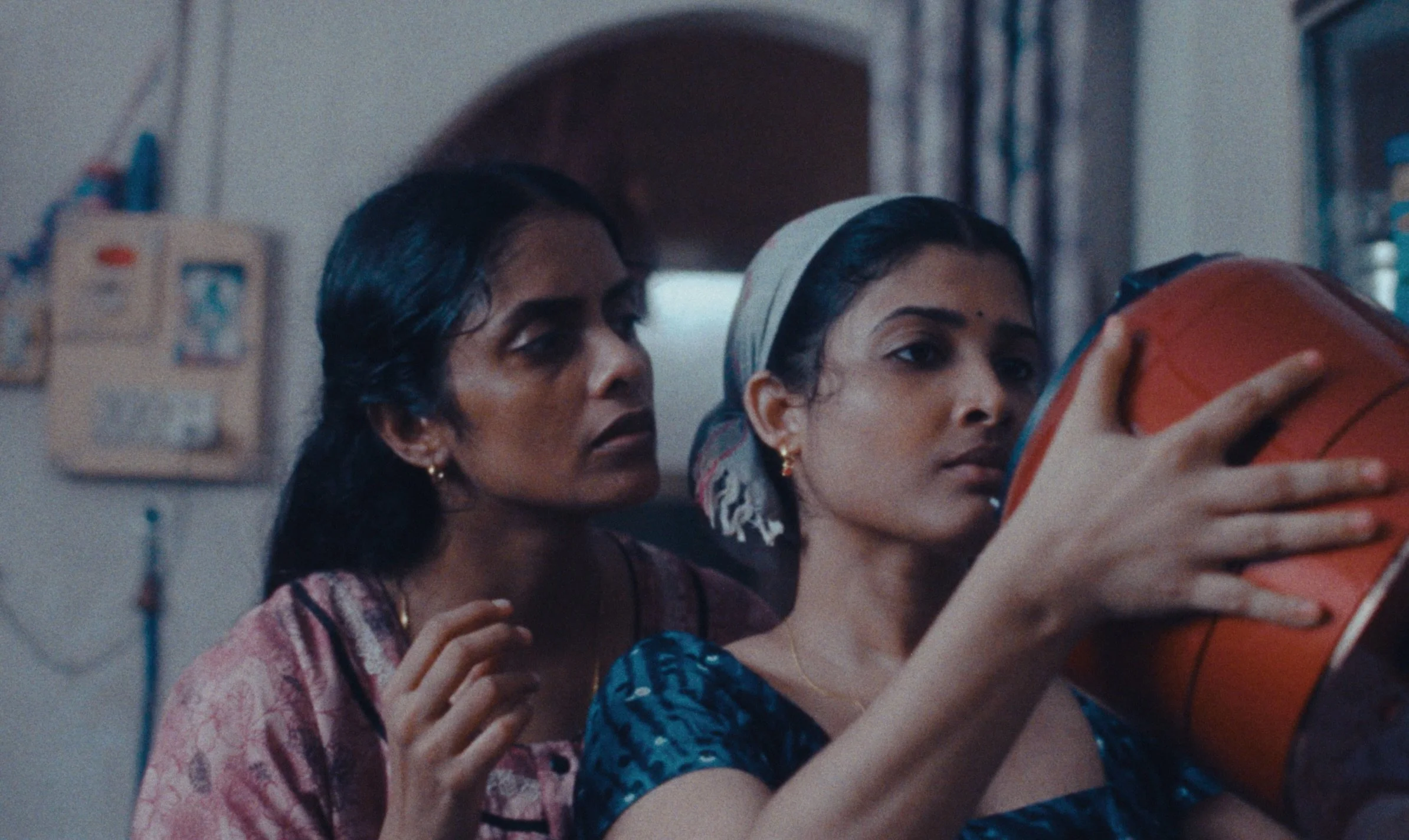
The arrival of a mysterious rice cooker from Germany sets responsible older roommate Prabha on a psychological journey. Prabha, responsible head nurse, struggles with her loneliness since her husband (by arranged marriage) went to work in Germany and never called or reached out. Her nurse roommate Anu, younger and a millennial Indian, secretly dates Shiaz, a Muslim Indian man. Anu ignores her mother's pleas to pick a husband from profiles her parents send and resists their expectation that she consent to an arranged marriage. Working-class Parvathy, the hospital cook, ultimately must leave her apartment (being torn down by developers for a new condo skyscraper). Rather than burden her son's family who live in a cramped apartment, she decides to return to her village on the beach where she has a home, even if she doesn't know how she'll make a living.
This is a movie where you're never quite sure where it's going in the best possible way. You worry for a while that something very dramatic—like a death, murder, or assault—is going to happen, mostly because interfaith relationships between Hindus and Muslims are still very touchy matters in both faiths. Much of the news about relations between the faiths is explosive, violent, and unresolved. But the light airy piano score and incredible neorealist and expressionistic cinematography by Ranabir Das keeps you trying to figure out exactly what kind of movie you are watching.
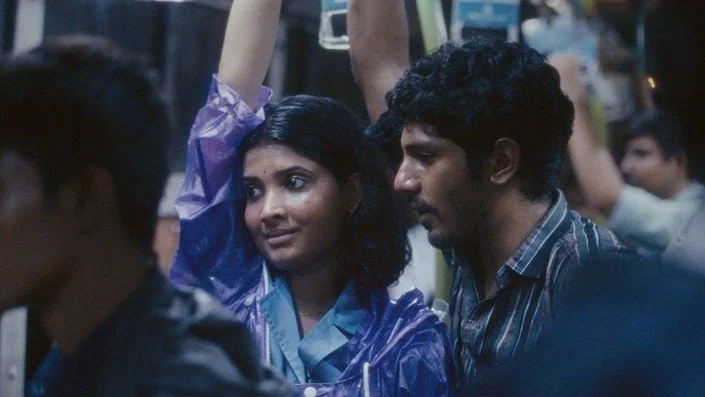
Will this be an observational "week in the life" neorealist look at a moment in the lives of these three women? Is it more a look at female friendships and relationships in the biggest, most modern of Indian cities? Yes and yes. And something daringly more. There's unabashed love and sexuality in this movie. There's getting drunk. Dancing. There's an intoxicating yet earthbound sense of Mumbai as a city where so many Indians from different languages and villages come to make money but can also feel lonely, disconnected, invisible.
The last third of the movie transitions to Parvathy's coastal village during the few days that Prabha and Anu help Parvathy move. It's where Prabha's and Anu's own personal stories hit inflection and turning points.
As with all great movies, to say more would be a crime. The movie prepares us for this final act with talent, grace, and skill. Yet (don't worry this will be very general) nothing quite prepares one for a penultimate sequence that is very open to interpretation. Is it magic realism? Is it an externalization of a psychological state? Does it actually happen?
Director Kapadia and her actors and team never spell out how we're supposed to interpret this sequence. At minimum, it appears to be a catalyst to a psychological change in one of the characters.
The beautiful ending of the movie (just after this stunning strange sequence) returns us more to a world and narrative we know. And yet the boldness of the previous narrative and filmmaking device is both commendable and disorienting. This writer is still wrestling with how to interpret this late movie surprise.
ALL THAT WE IMAGINE AS LIGHT is honest, sure of itself, truthful, humanist, stylish. It's another glimmering star of hope in the firmament letting us know cinema has more stories to tell and more ways to tell the stories. In fact, it's an inspiration that cinema is still drawing talent like those involved with this movie to make sublime narrative works of profound emotional depth and power.
Craig Hammill is the founder and programmer of Secret Movie Club.

