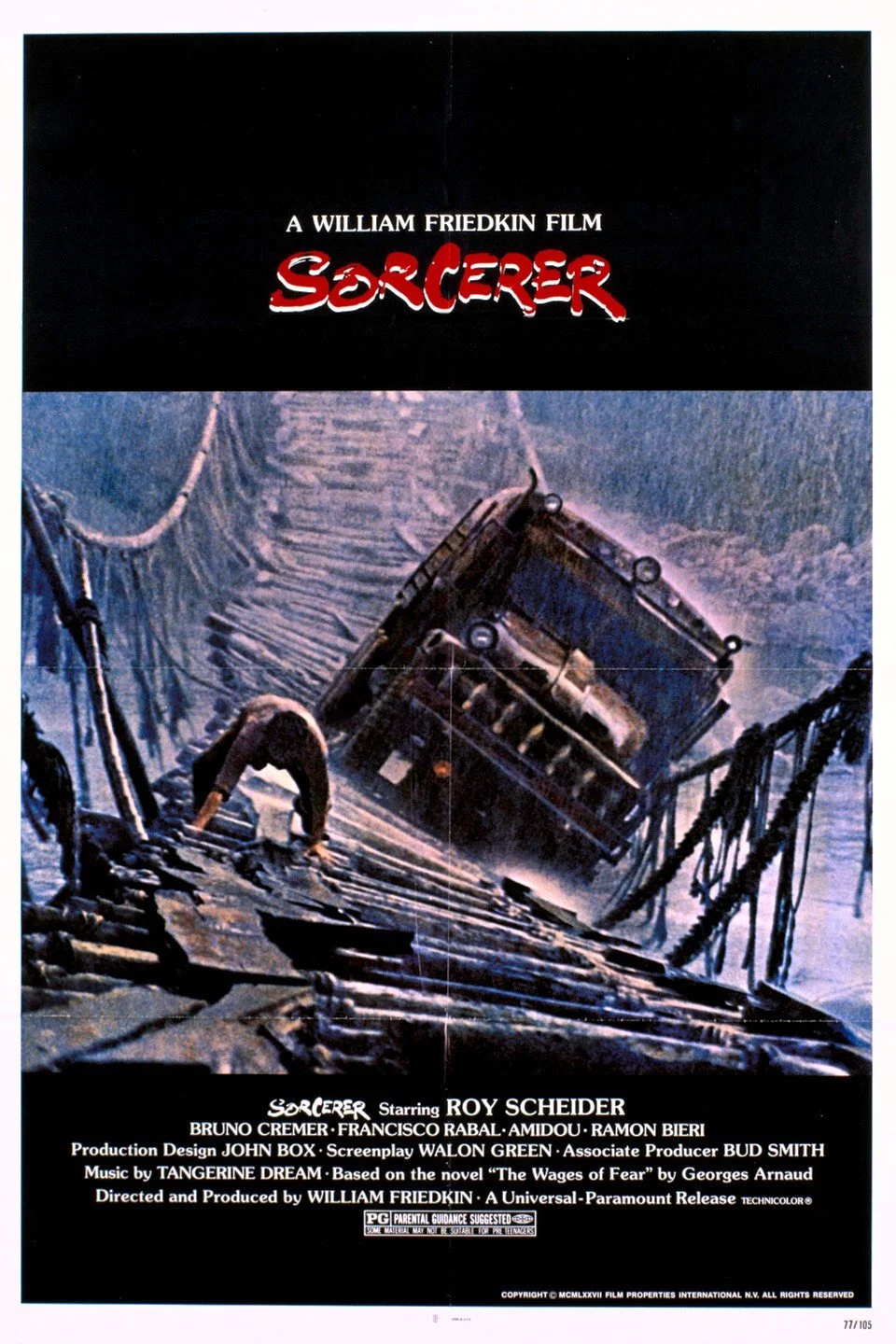
ALMOST THERE: William Friedkin's SORCERER (dir by William Friedkin, w/ Roy Scheider, adapted from/remake of Henri-Georges Clouzot's THE WAGES OF FEAR 1953, 121mns, USA, 1977)
Cut to the chase — this is an incredible movie.
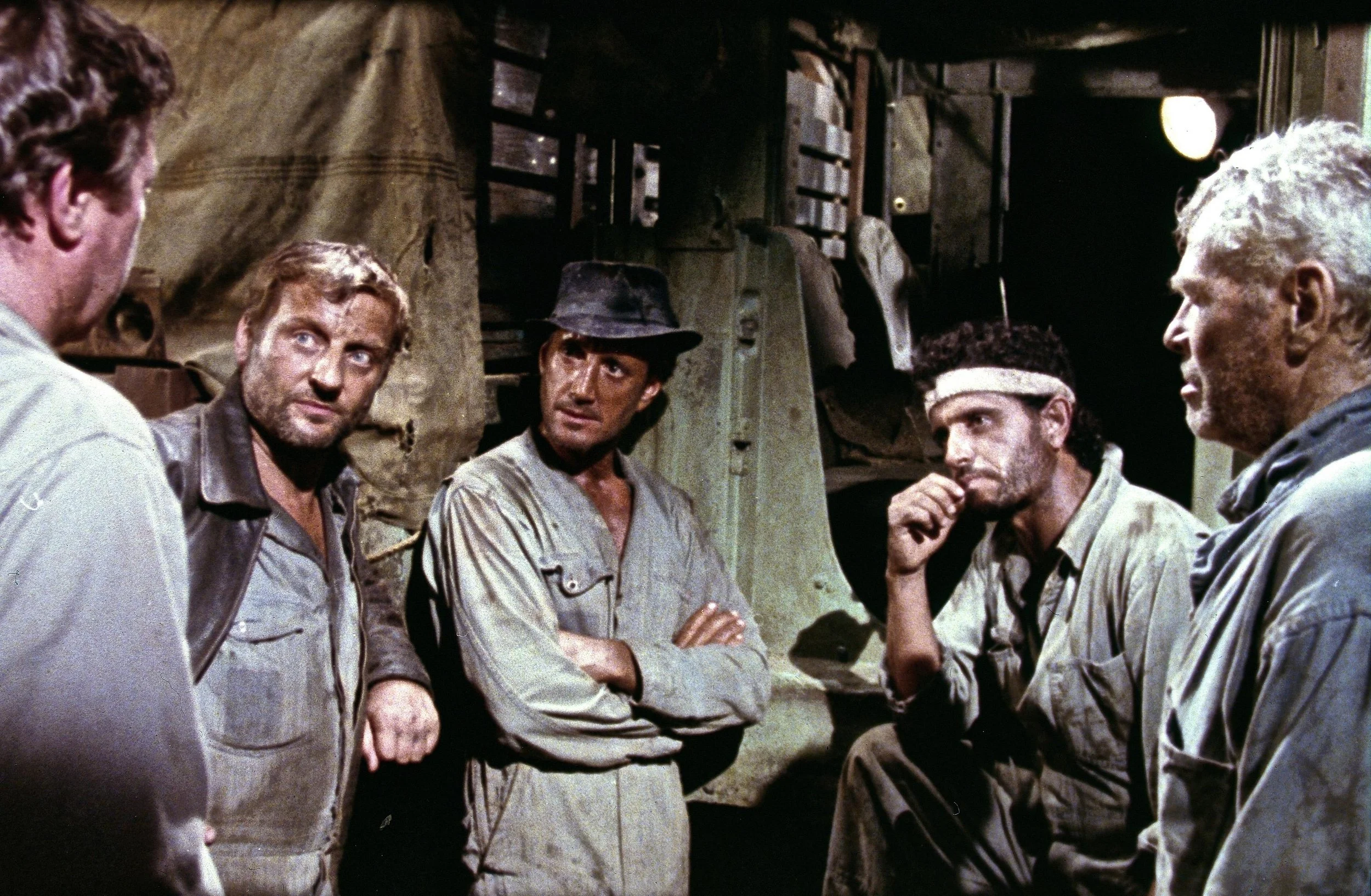
William Friedkin's 1977 adaptation of Henri-Georges Clouzot's THE WAGES OF FEAR follows four men, each fleeing their past lives for different reasons, who end up stranded in a South American company town with no legal way out. When an oil well fire requires nitroglycerine to be transported through miles of jungle terrain, they volunteer for the job — the only job that pays enough to buy them their freedom.
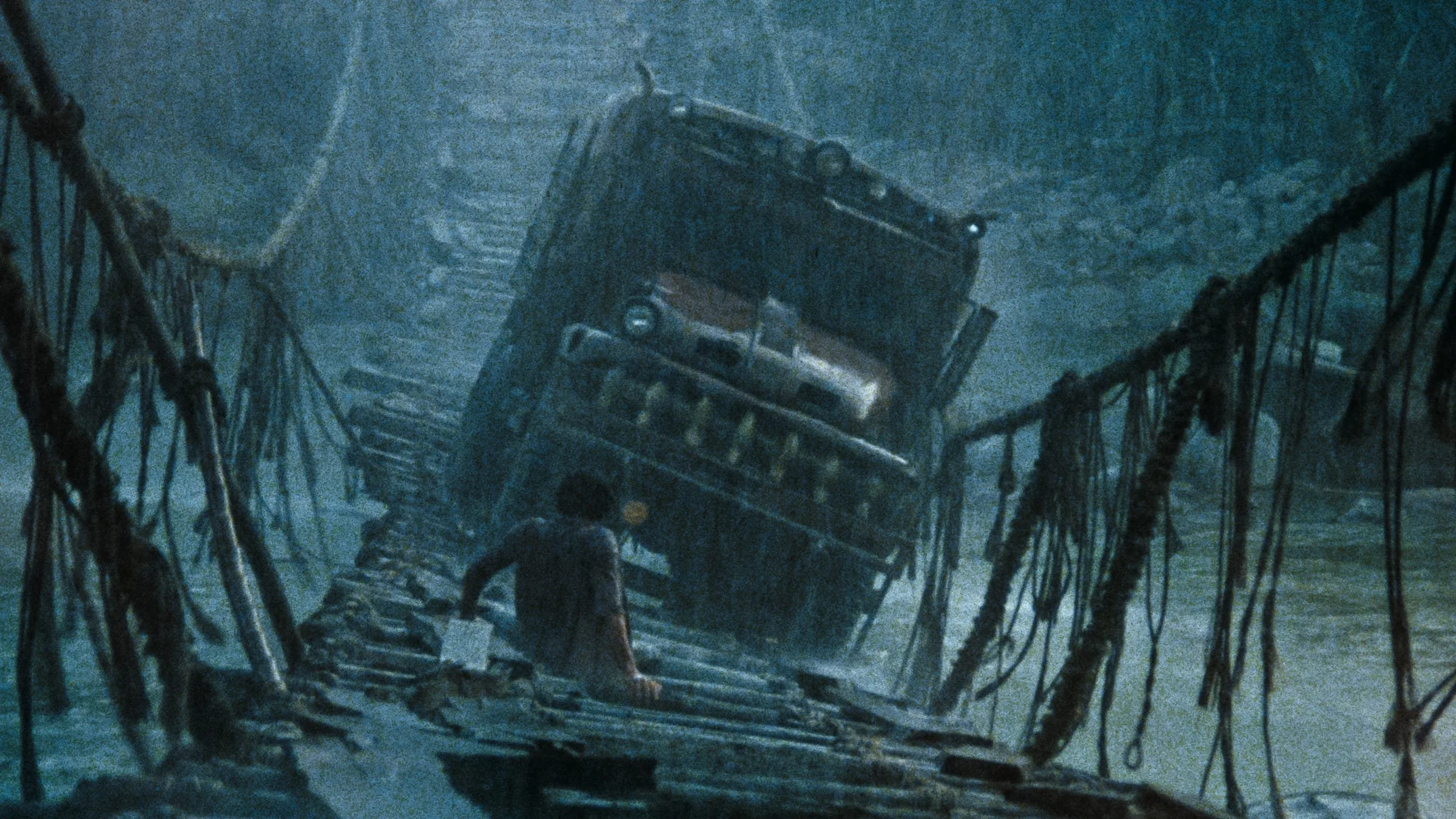
The film's centerpiece, and perhaps the most sustained sequence of tension in 1970s American cinema, is the bridge crossing: two trucks carrying volatile explosives inching across a rope-and-plank bridge above a river gorge, in a rainstorm, at night. Friedkin films it with absolute commitment to physical reality — no cuts that cheat time, no music that tells you how to feel. Just the bridge, the rain, the trucks, and the abyss.
This is visceral filmmaking of the highest order. Friedkin knows how to command tension the way a conductor commands an orchestra — he understands pacing as a physical force, not just a structural principle. THE FRENCH CONNECTION and THE EXORCIST already demonstrated this; SORCERER confirms it.
One honest reservation: the four protagonists do not have sufficient depth or redeeming qualities to generate the full emotional investment the film is reaching for. Compare the protagonist of Clouzot's original, or the leads in Hawks' Only Angels Have Wings, or Huston's Treasure of the Sierra Madre — characters whose flaws are specific and illuminating. Friedkin's men are vivid but not fully human in the way the film would need them to be for its tragic dimensions to fully land.
The ending, too, is somewhat predictable — the film sets up its reversal too visibly for it to arrive with full force.
These are not small criticisms. But they are criticisms of a film in the near-masterpiece range — a film that almost achieves something extraordinary, and in the attempt achieves something genuinely great. The bridge sequence alone earns it a place in the conversation. See it in the best presentation you can find.