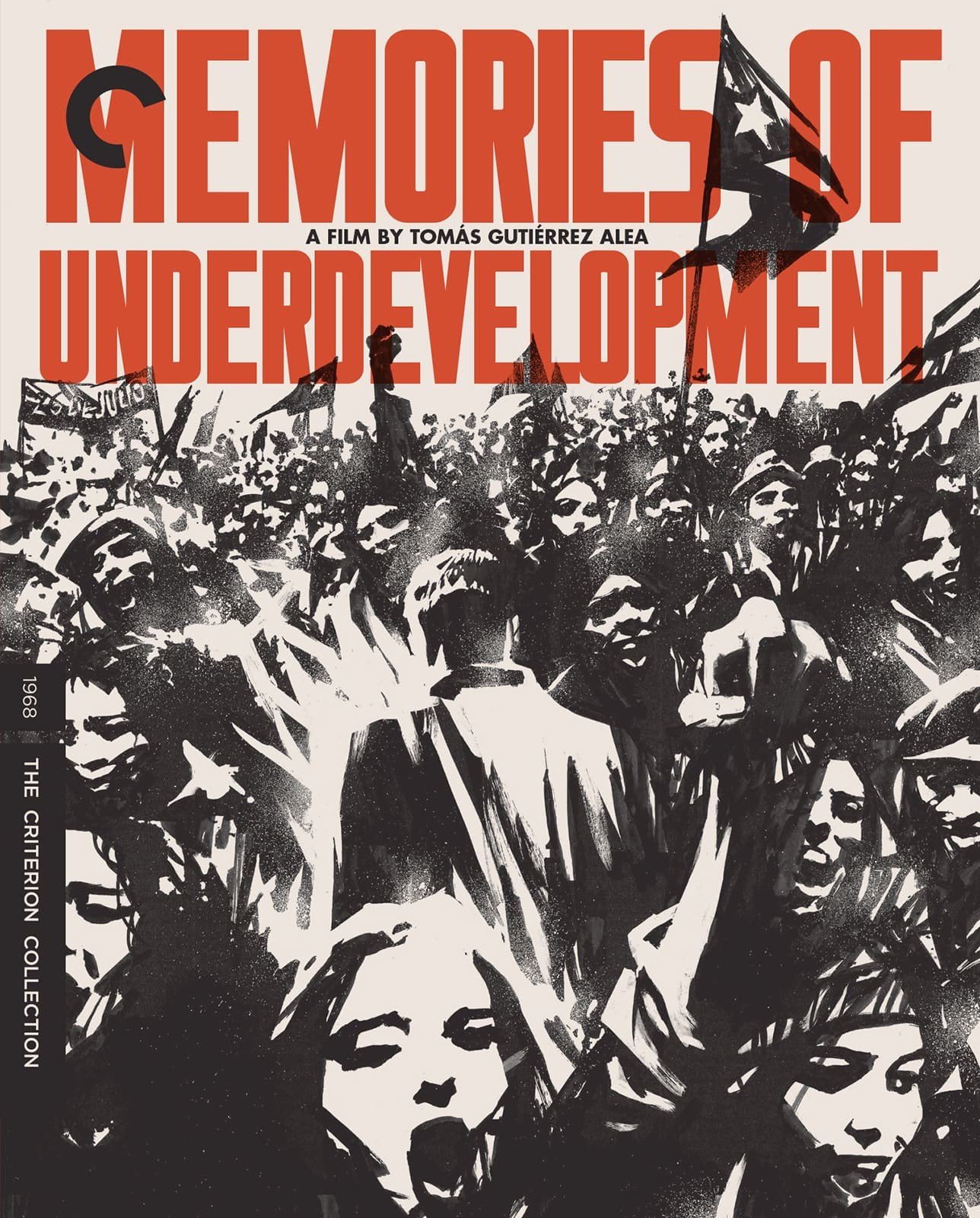
MEMORIES OF UNDERDEVELOPMENT (co-adapt & dir by Tomás Gutiérrez Alea, w/ Sergio Corrieri, Daisy Granados, 97mns, Cuba, 1968)
MEMORIES OF UNDERDEVELOPMENT proves that cinema can communicate nuance, indeterminancy, and illuminate vast gray areas — that it is not merely a medium for clear arguments and defined positions, but one capable of the honest ambiguity that characterizes actual human experience.
The film, adapted from a 1965 novel and part of Martin Scorsese's world cinema project available on the Criterion Channel, follows Sergio — 38 years old, bourgeois, self-aware about his bourgeois status in a way that does not particularly trouble him. After the Cuban Revolution, his family emigrates. He stays. His reasons are not ideological; he wants to have sex and be left alone. He is neither hero nor villain — he is, with pointed precision, a man whose defining quality is his refusal of defining qualities.

He resembles, in various ways, the protagonists of Five Easy Pieces and The Unbearable Lightness of Being — men who have identified freedom with detachment and are discovering the cost of that identification. But where those films are sympathetic to their protagonists' struggles, Gutiérrez Alea is more diagnostic. Sergio's detachment is not romantic; it is underdevelopment of a particular kind.
The film blends personal narrative with documentary-style voiceover. Historical footage of Cuban events — the Bay of Pigs, the Missile Crisis — interrupts Sergio's story. The interruptions are not incongruous; they insist that the personal is never only personal, that individuals live inside history whether they choose to engage with it or not.

The editing is exhilarating — new wave adventurism in the best sense, cutting on associations rather than continuity, refusing the comfortable rhythms of conventional narrative. Gutiérrez Alea is not making a thesis film. He is making something stranger and more honest: a film that holds its protagonist in critical regard without condemning him, that takes the revolution seriously without becoming its instrument.
One of the genuinely essential films to emerge from Latin America. Seek it out.