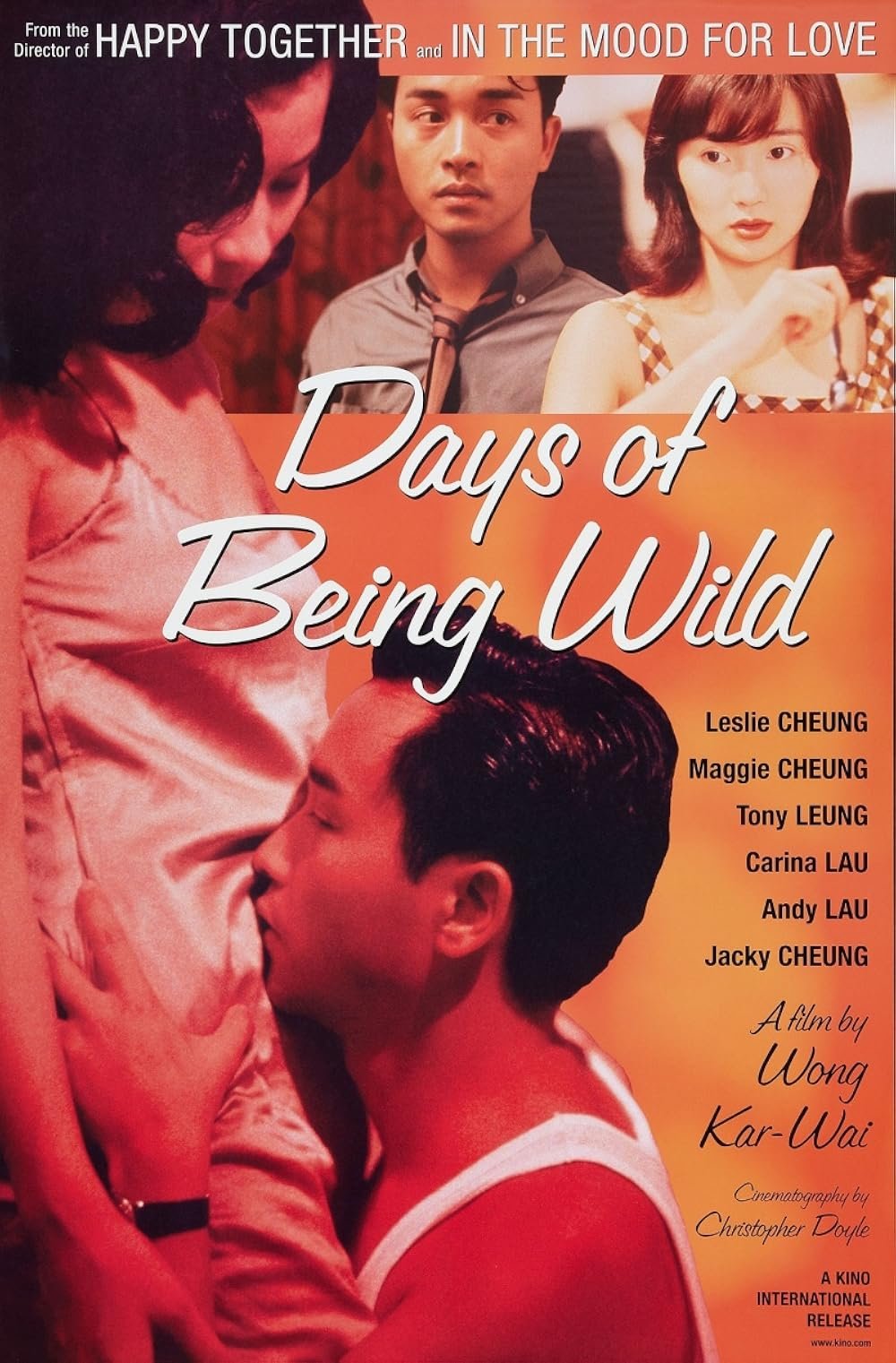
DAYS OF BEING WILD (wri & dir by Wong Kar Wai, cinematography by Christopher Doyle, w/Leslie Cheung, Carina Lau, Maggie Cheung, Hong Kong, 94mns, 1990)
DAYS OF BEING WILD was, in many ways, the movie that launched Wong Kar Wai on the international cinema scene. It is his most exhilarating film — what I would call his "full expressive" breakout, the moment when a filmmaker stops demonstrating talent and begins exercising a fully formed vision. In this it resembles Scorsese's Mean Streets, or Jordan Peele's Get Out: a second film that announces, without qualification, that we are in the presence of a major voice.
The film follows Yuddy (Leslie Cheung) — mercurial, beautiful, cruel in the way that people who have been abandoned as children are often cruel. He romances Su Li-zhen (Maggie Cheung), who works at a stadium snack counter, and then abandons her as casually as he acquired her. He pursues showgirl Mimi (Carina Lau), who pursues him back with equal recklessness. Around them orbit characters who want connection and cannot sustain it.
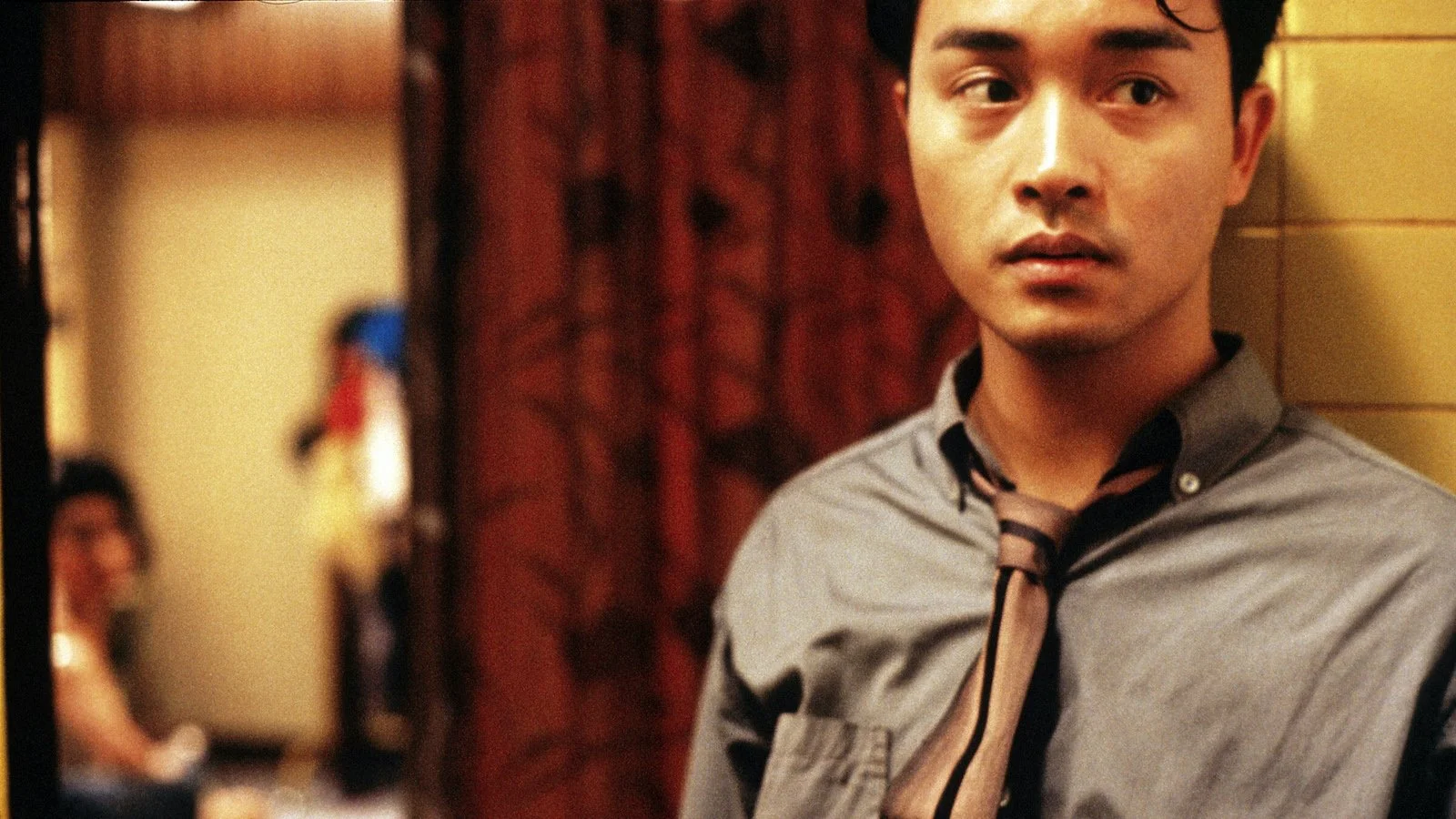
Christopher Doyle's cinematography is unlike anything else in Hong Kong cinema of its era — or perhaps anywhere. He shoots as if searching for expression and finding no artifice acceptable. The camera is unstable in the most productive sense: always trying to close a distance between itself and something it can't quite reach. Light falls as if by accident. Colors are saturated to the edge of abstraction.
There is a sequence — rain, then dancing, then a cut to a different kind of intimacy — that is one of the most exciting scenes of sexual romance ever committed to film. Wong Kar Wai doesn't stage it as seduction; he stages it as weather. Something that happens because the conditions are right, not because anyone decided it should.

The film ends with a musical-dance structure that feels like a formal statement: these are not stories with resolutions, they are notes in a longer piece. The famous final shot — Tony Leung, unseen until this moment, preparing to go out — is an act of pure cinematic generosity, the promise of something more.
What DAYS OF BEING WILD finally explores is humanity's quest for meaning, for connection, for transcendence — and the many ways we find to avoid the vulnerability those things require. That this exploration is conducted in the idiom of pop music, green-lit corridors, and slow-motion dancing is part of Wong Kar Wai's genius. He finds the metaphysical in the carnal, the eternal in the momentary.