UGETSU (dir by Kenji Mizoguchi, based on Ugetsu Monogatari by Ueda Akinari, Daiei, 93mns, Japan, 1953)
Part of Secret Movie Club's Top 1000. A ridiculous number we know. But there are easily 1000 must see movies in cinema. Probably many of thousands. But this number feels right to us.
UGETSU is a haunting film. While there are actual ghosts in the narrative, it's haunting because of the ultimate painful truth it illuminates. Rarely has cinema communicated a fundamental human truth with such power and force.
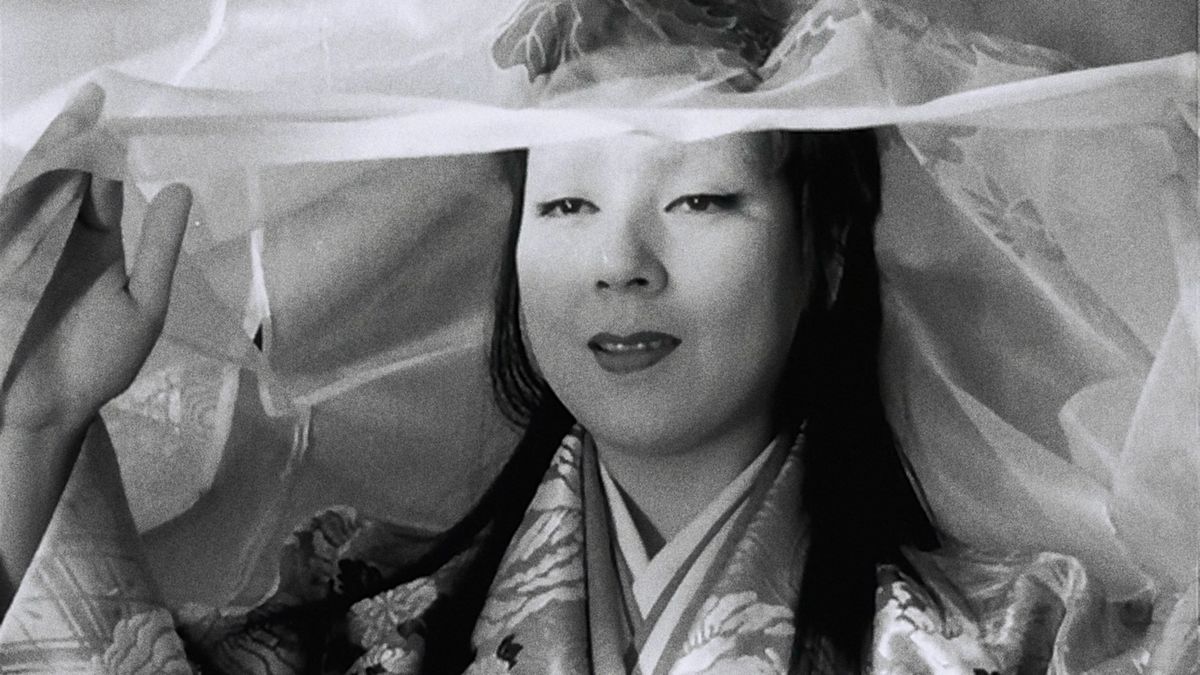
Genjuro and his brother in law Tobei, their wives, and children go to sell pottery in 16th century feudal Japan. An on going war separates the men from their wives and children. Genjuro is seduced by a beautiful noble lady who turns out to be a spirit. Tobei, seeking fame and glory in war, discovers the head of a defeated general and pretends he has slain the great warrior.
Their ultimate discoveries of the fates that befell the families they left power the movie to its overwhelming conclusion.
Mizoguchi is sometimes grouped in a trio of great Japanese moviemakers along with Kurosawa and Ozu. If Kurosawa was the dynamic all-around cinematic genius and Ozu was the expert wry humanist of everyday life, Mizoguchi was an artist in portraying suffering and essential truths of the Japanese national character.
These broad descriptions are reductive. All three moviemakers are masters. All made comedies, dramas, period pieces, and contemporary pieces.
Mizoguchi's UGETSU though accomplishes what so many works of art strive for but so few can express: an essential truth of existence we all sense but don't appreciate until it is too late-that we had the greatest of gifts and treasures in our families but didn't realize it until it was too late.
The movie is almost a kind of doppleganger to Kurosawa's SEVEN SAMURAI. Whereas Kurosawa's movie focuses on how essential goodness can win out against the ever present forces of devastation, Mizoguchi tells the probably much more common stories of people who fell short when their characters were tested.
The director and his screenwriters adapted two stories from UGETSU MONOGATARI. And the movie feels like two stories.
The ghost story involving Genjuro is unsettling and atmospheric. But it really is just the pretext for Genjuro's devastating realizations when he returns home looking for his wife and child.
Tobei's story is an unmasking and interrogation of masculine drives for glory, power, fame, rank, recognition and the toll it takes on loved ones around the seeker of such worldly temptations.
Both stories end in devastations. Both stories showcase the trials and horrible iniquity and pain women in societies like these daily endure. Both end in almost unbearable beauty and tragedy.
Martin Scorsese and many others have talked about how important UGETSU is to their work. You can see its spectral traces in a Scorsese movie like SILENCE.
And UGETSU belongs in the same rarefied category of transcendent movies that include Dreyer's THE PASSION OF JOAN OF ARC and ORDET, Lars Von Triers' BREAKING THE WAVES, Kubrick's 2001, Tarkovsky's SOLARIS, Bresson's AU HAZARD BALTHAZAR and DIARY OF A COUNTRY PRIEST, and so on.
The movie is not overtly spiritual in the western sense of an affirmation of a transcendent force. Or if it is, it feels much more Eastern and Buddhist. The affirmation is an affirmation of the transcendent's reality within the very essence of human family itself.
A movie for which the floodgates of emotion open for many of us into uncontrollable sobbing. A masterwork.
Craig Hammill is the founder/programmer of Secret Movie Club